
Exposição / Exposição Temporária
Oceano - o mundo é um arquipélago
17/12/2025 - 19/05/2026
Eixo temático
Informações gerais
Código
MDA.EXP.00067
Nome
Oceano - o mundo é um arquipélago
Oceano
Ocean - the world is an archipelago
Ocean
Oceano
Ocean - the world is an archipelago
Ocean
Descrição
A exposição se ergue em torno dos eixos memória, atenção e antecipação, propondo um diálogo entre a inteligência humana e a inteligência oceânica.
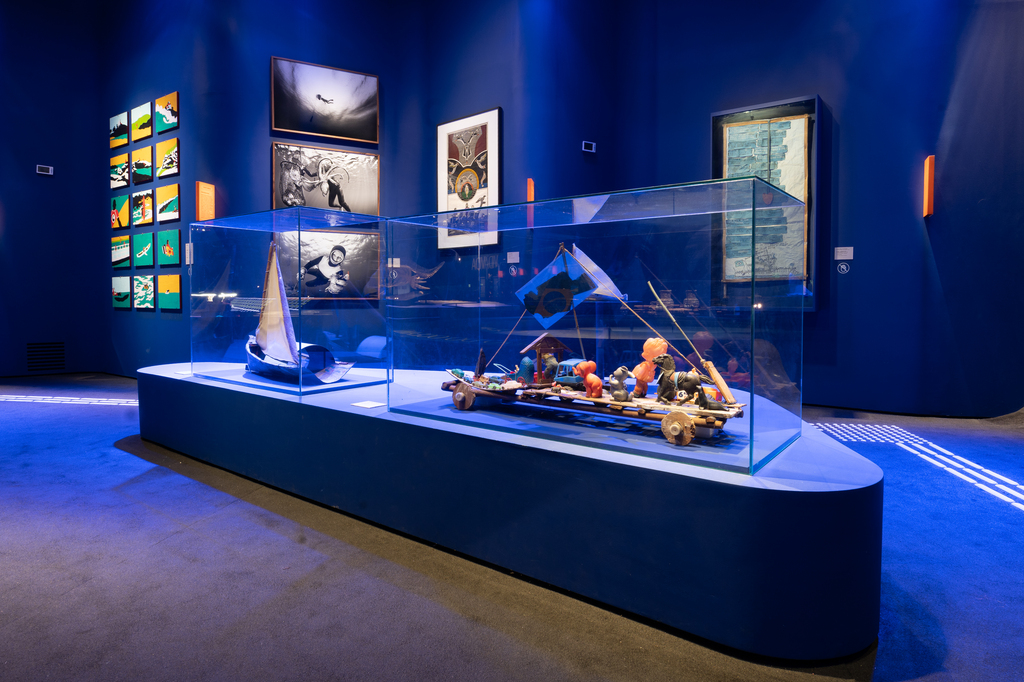
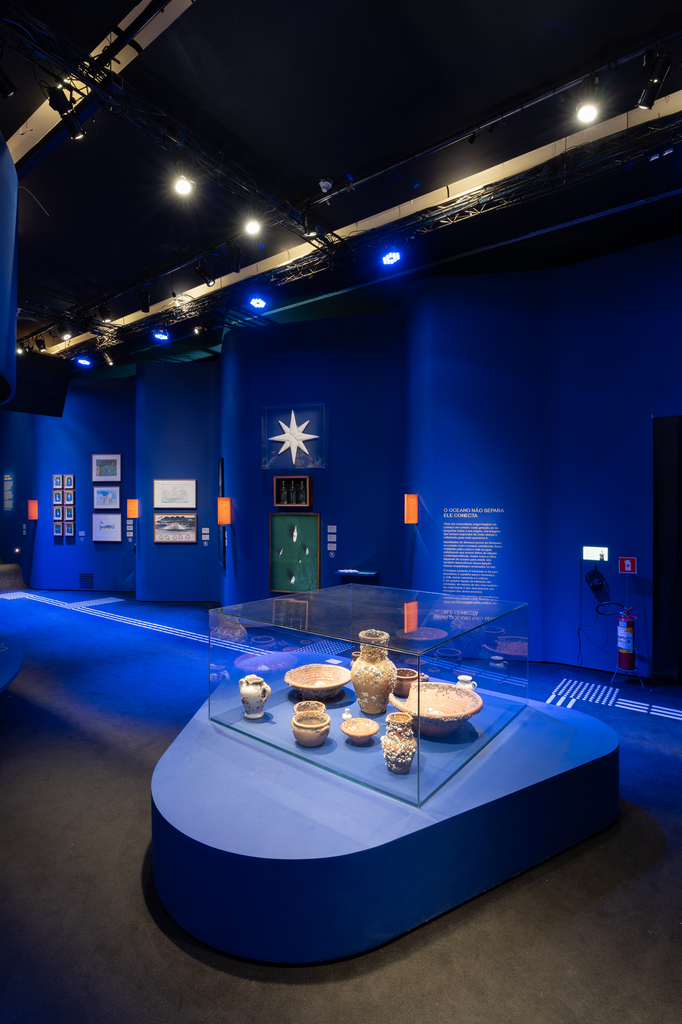
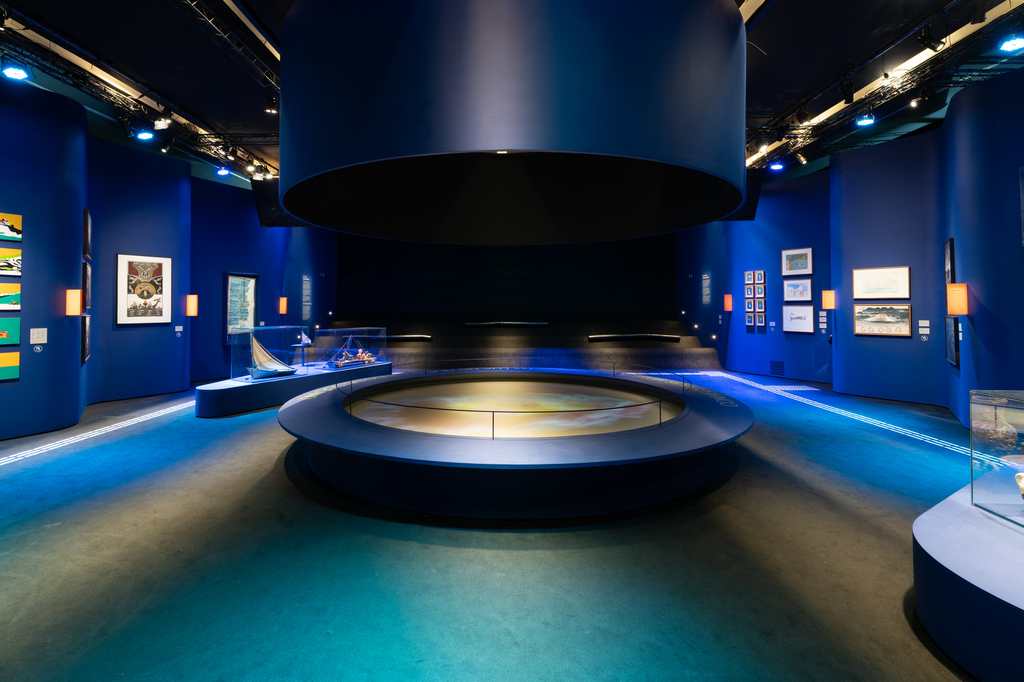
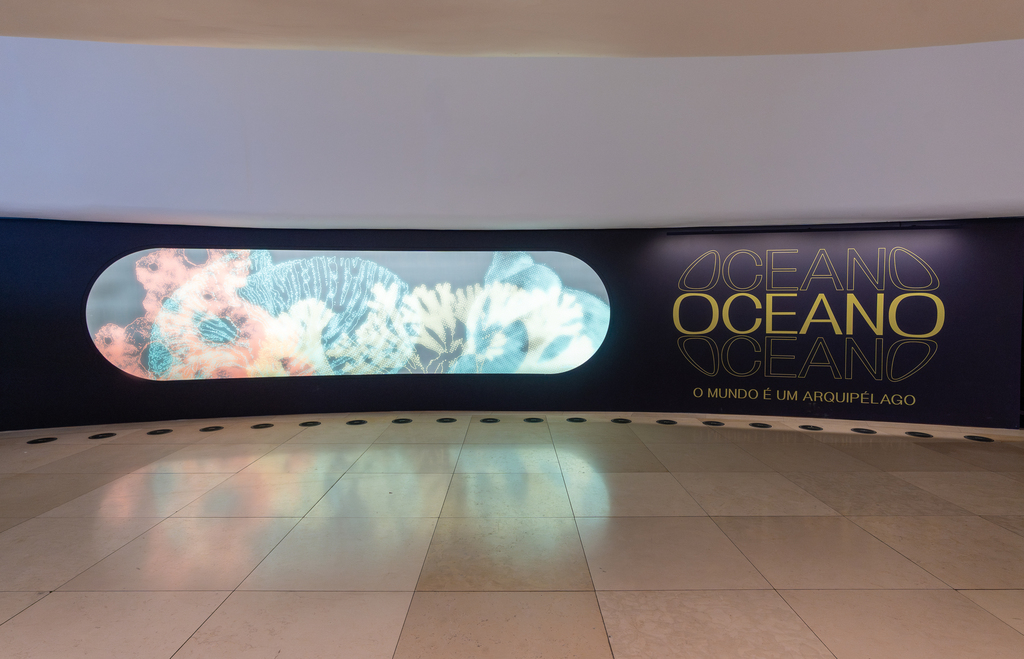
A exposição “Oceano – O Mundo é um Arquipélago” nasce de uma premissa fundamental: a de que a vida, em todas as suas formas, é inteligente e que essa inteligência se manifesta também nas profundezas marinhas. A mostra revisita o oceano como nossa origem, recuperando memórias que nos conectam ao momento em que os primeiros organismos transformaram o planeta e produziram o ar que respiramos. Um convite a experimentar essa ancestralidade por meio de ambientes sensoriais que simulam luz, textura e movimento das águas.
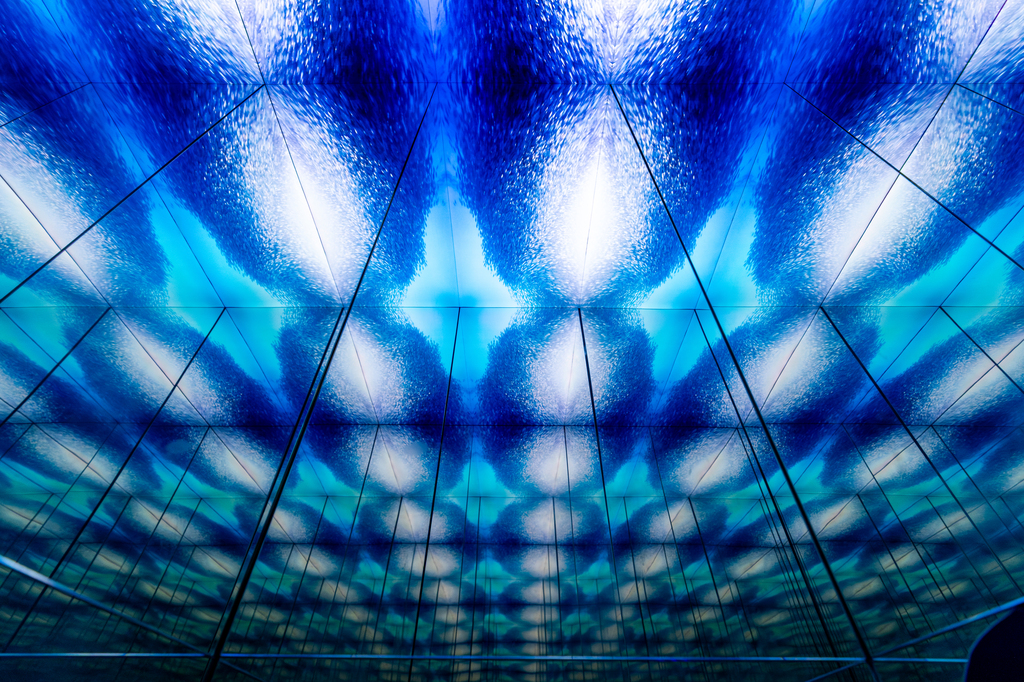
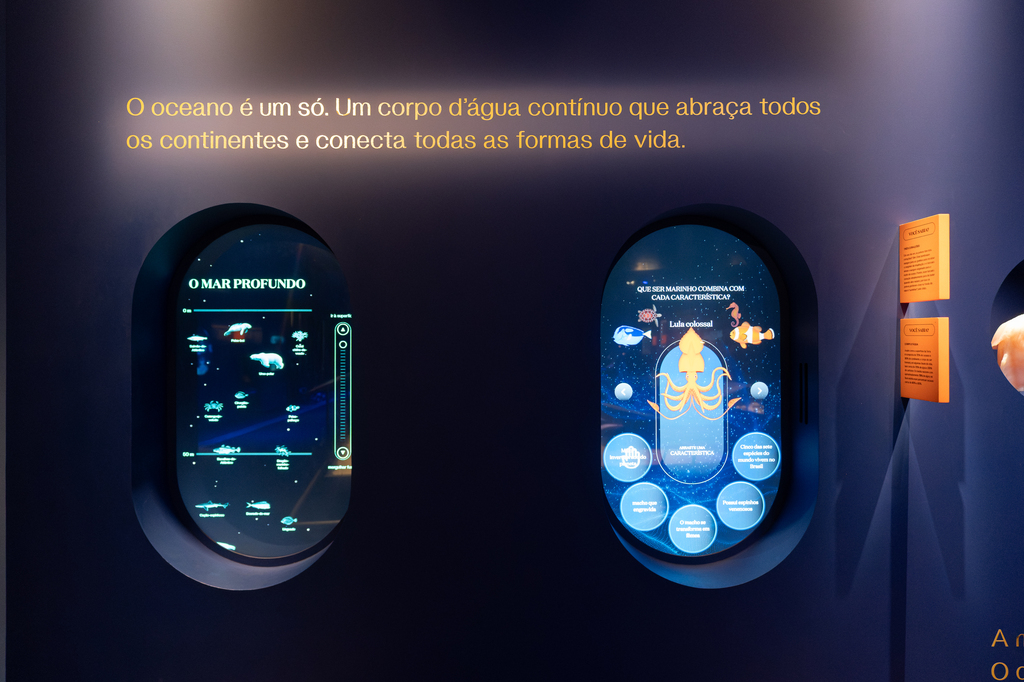
A mostra se desenvolve a partir dos eixos “Memória”, “Atenção” e “Antecipação”, alinhados aos “Sete Princípios da Cultura Oceânica” da UNESCO, que afirmam a existência de um único oceano global até sua influência decisiva no clima, na proliferação de vida da Terra e na diversidade de ecossistemas. Esses princípios tomam forma nas salas expositivas: em “Mergulho”, o público inicia a jornada em um ambiente que busca ativar as memórias de origem e imersão. A sala é quase toda escura, com luz e imagem das águas vinda do alto, para dar a sensação de se estar embaixo d’água.
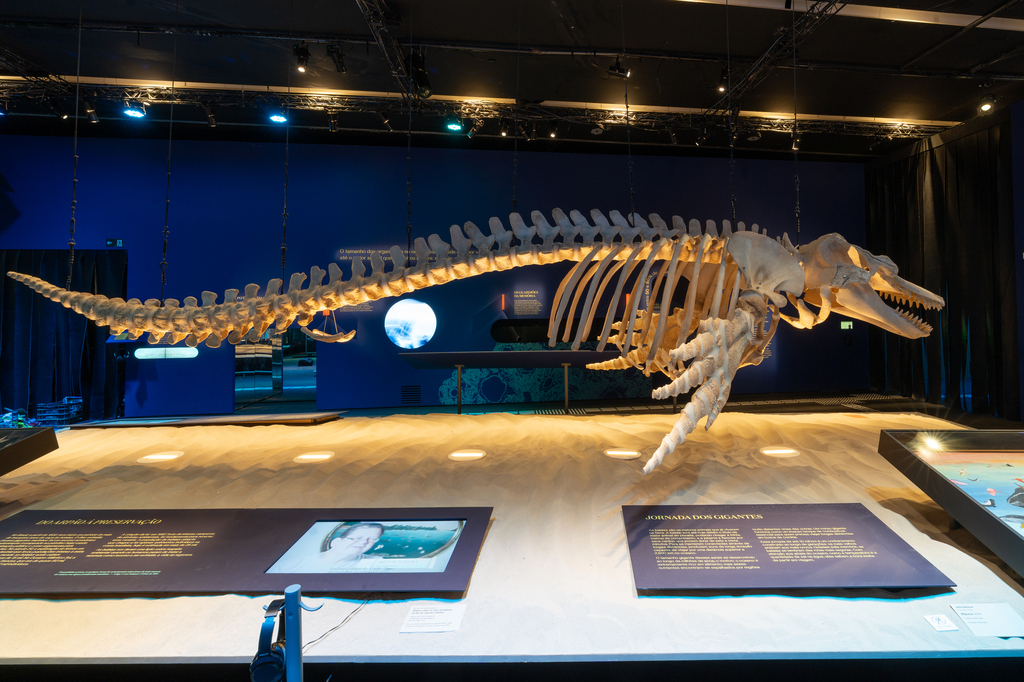
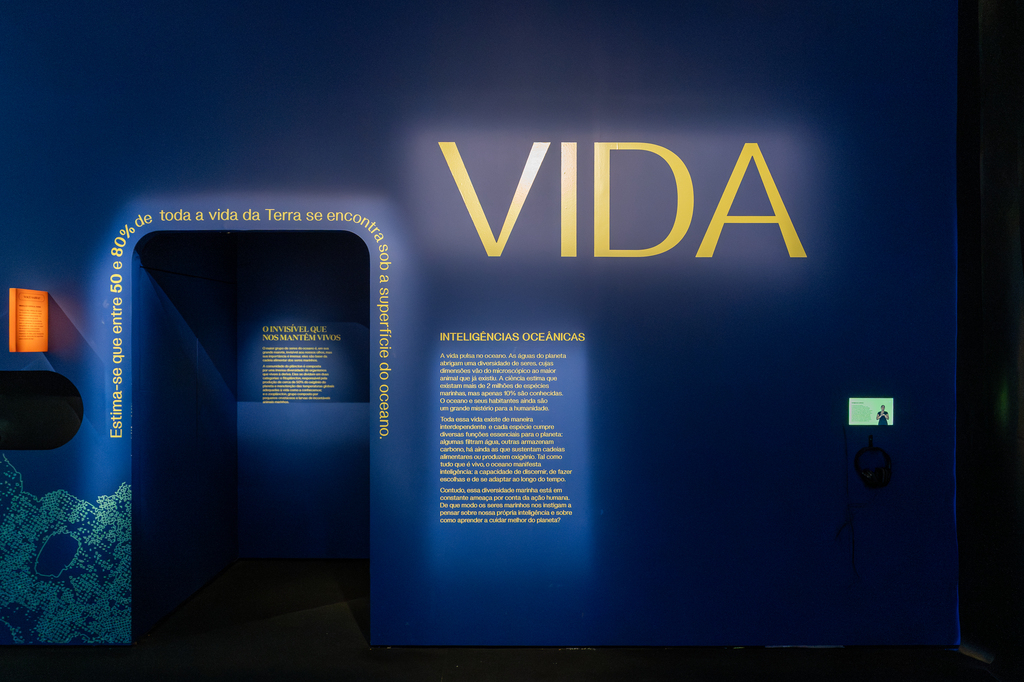
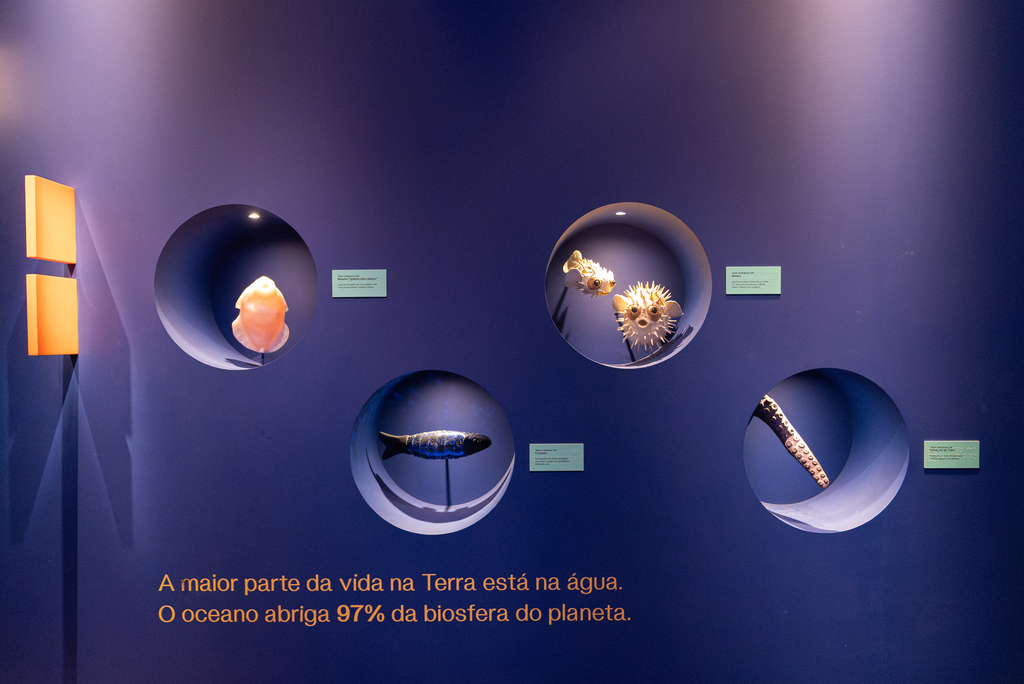
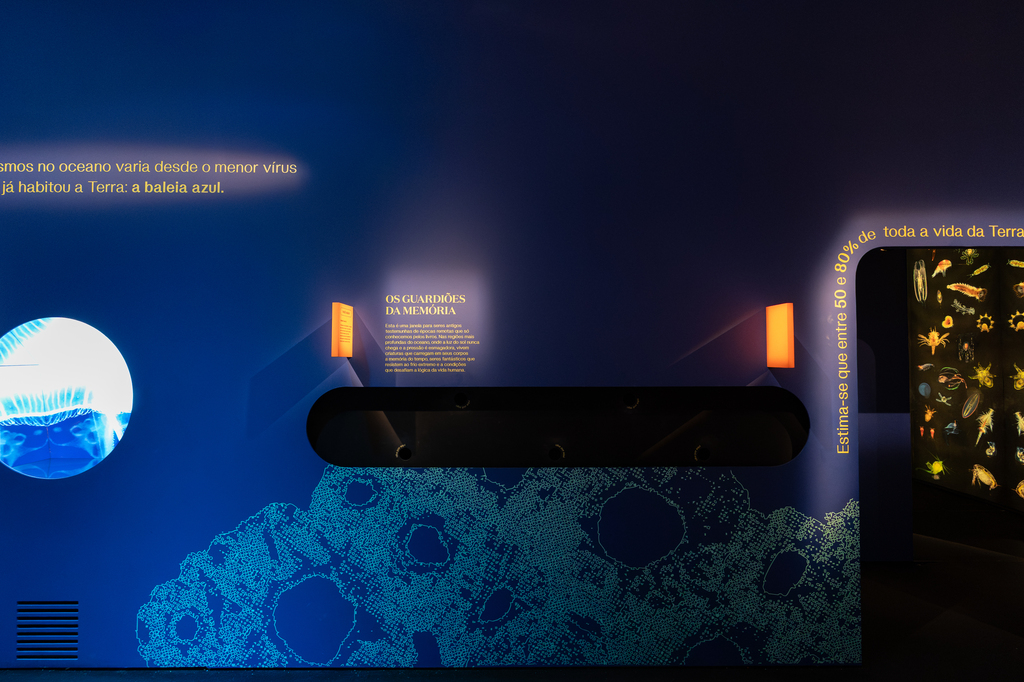
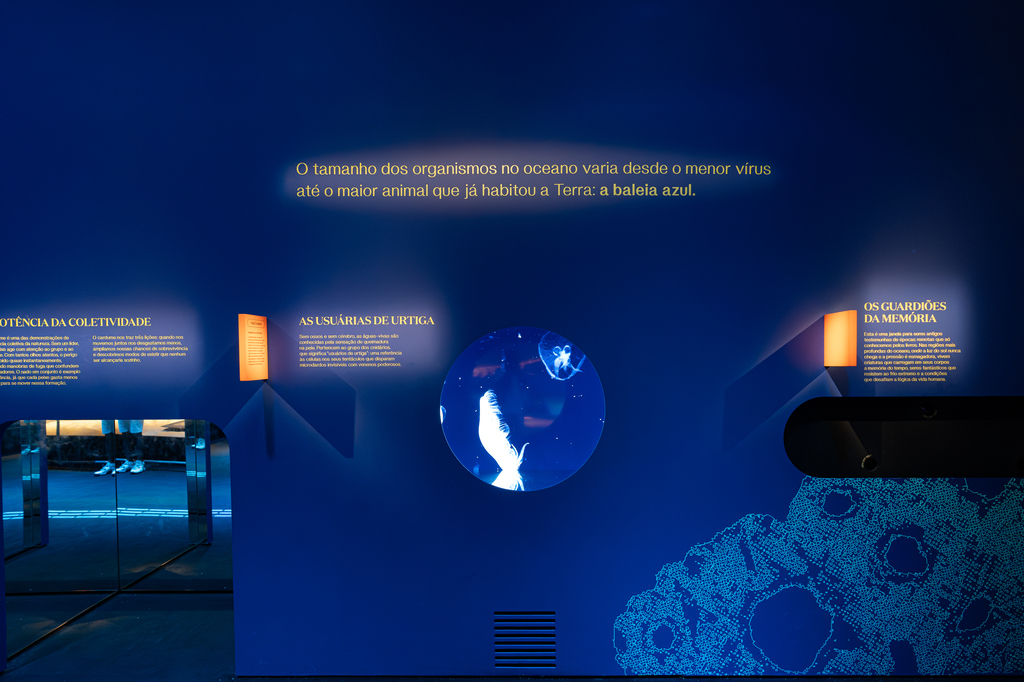
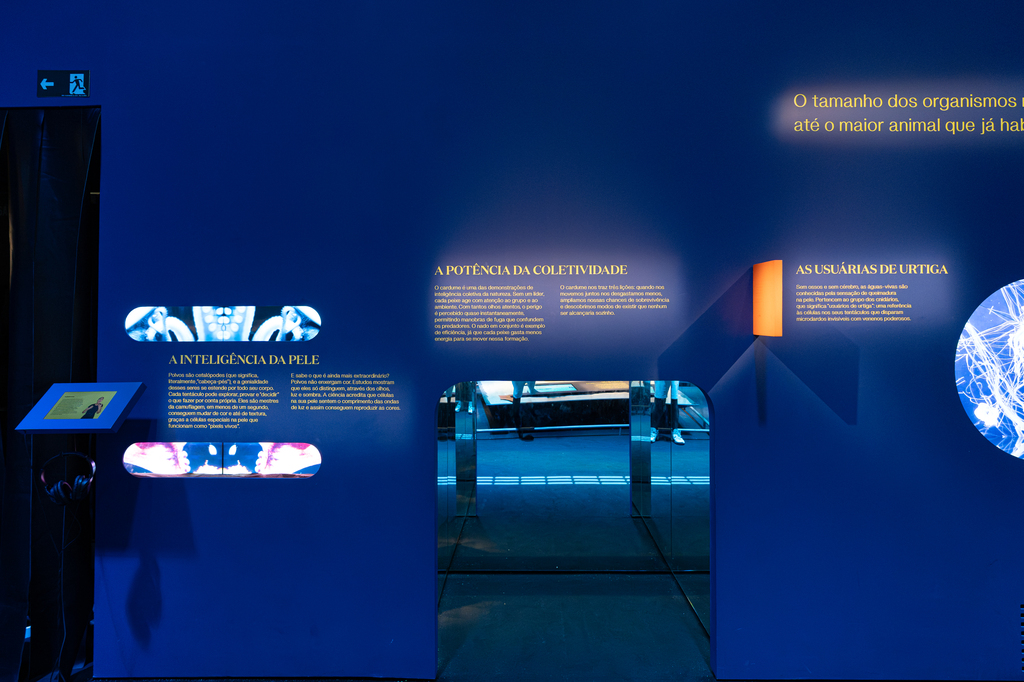
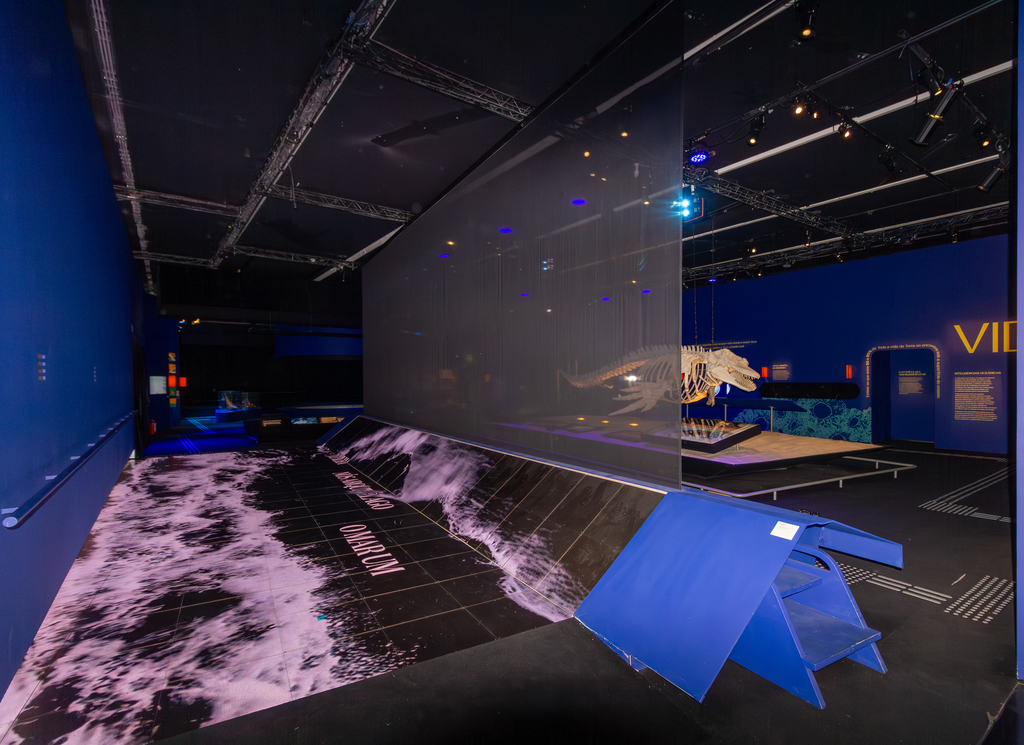
Já em “Vida”, o público encontra desde organismos microscópicos até espécies gigantes, como o esqueleto de orca de sete metros - cedido à exposição pelo Museu Nacional -, suspenso no salão principal acompanhado por projeções mapeadas da espécie; em “Borda”, o oceano é apresentado em estrutura no teto da sala como um sistema atento, sensível às pressões humanas, cujas respostas — como a elevação do nível do mar — revelam sua inteligência e agência ecológica.
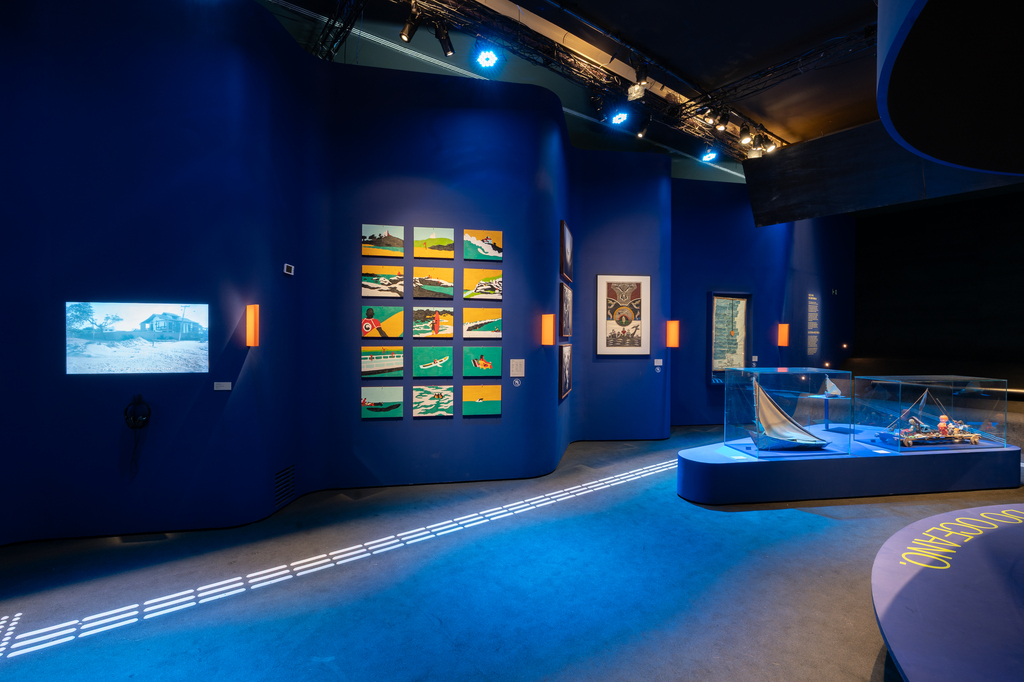
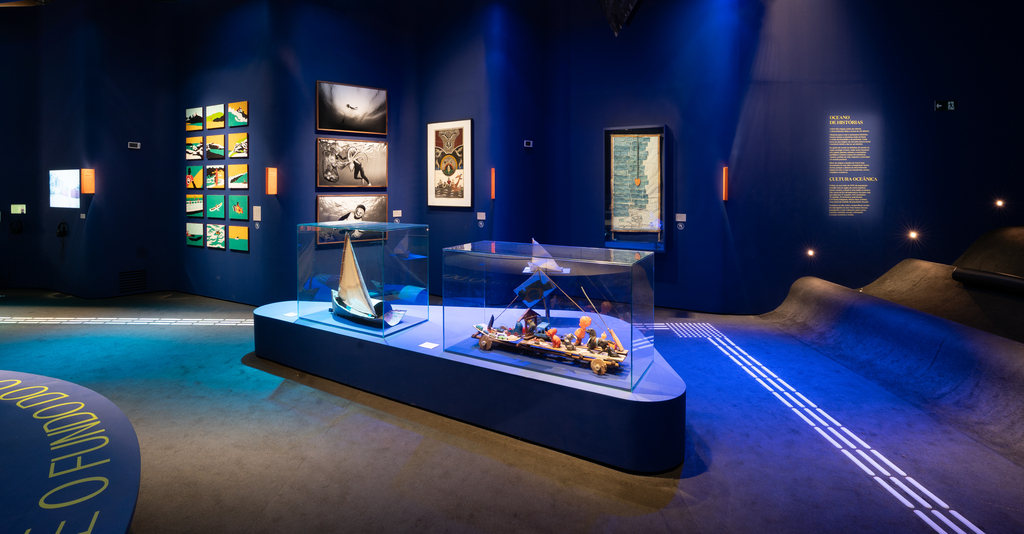
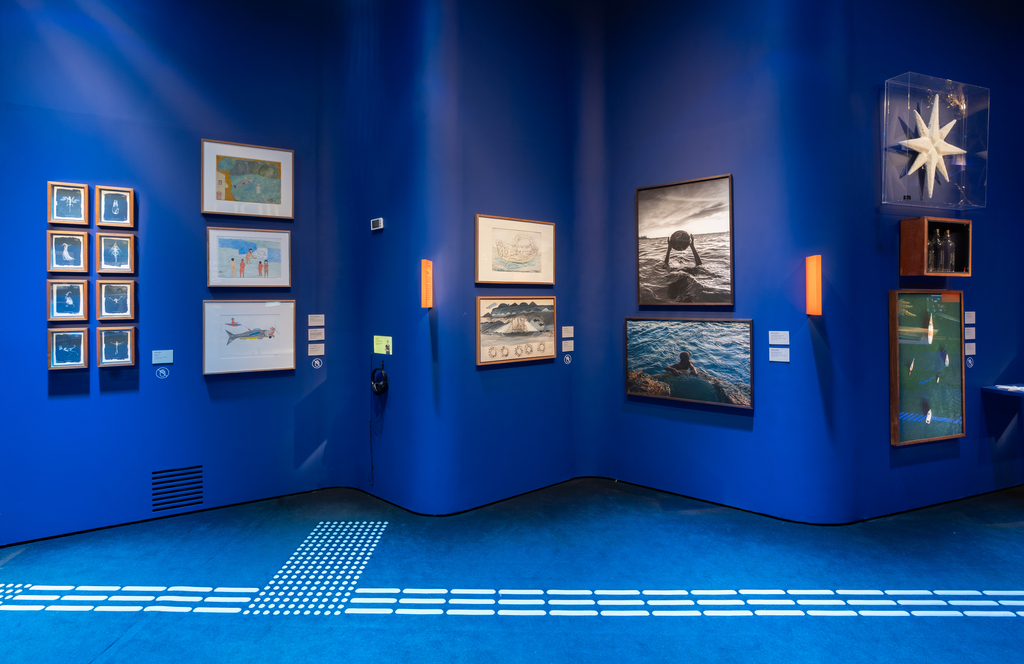
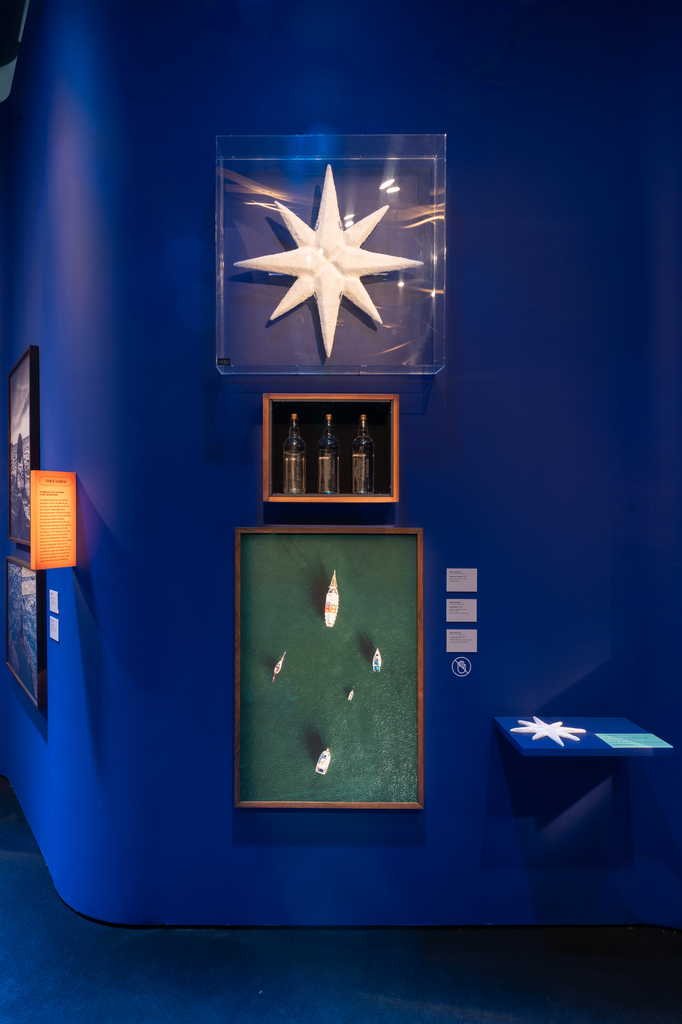
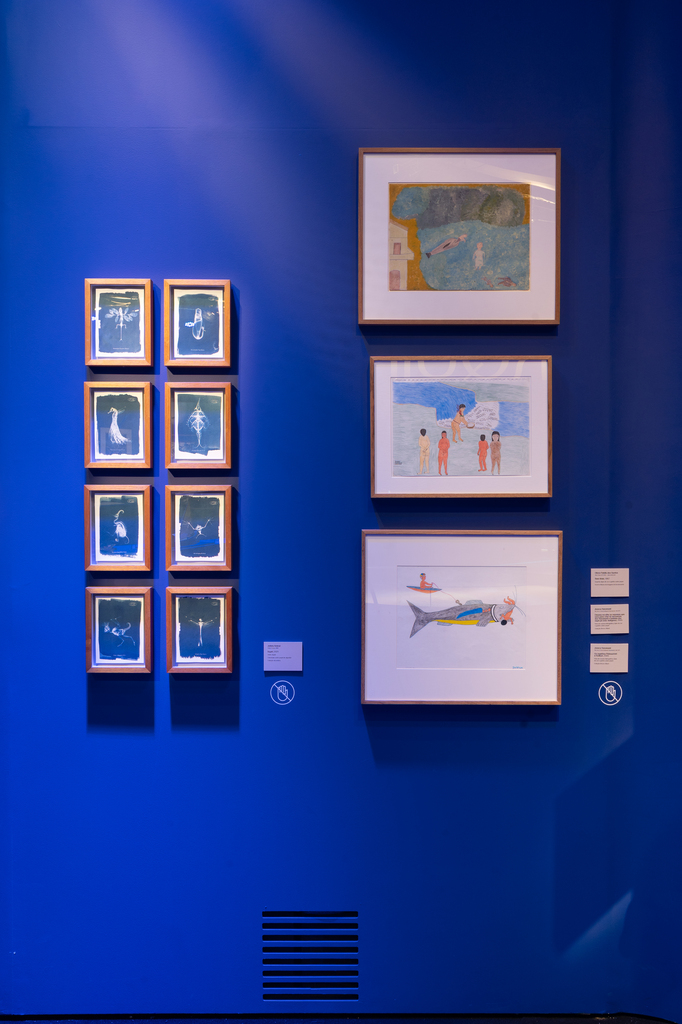
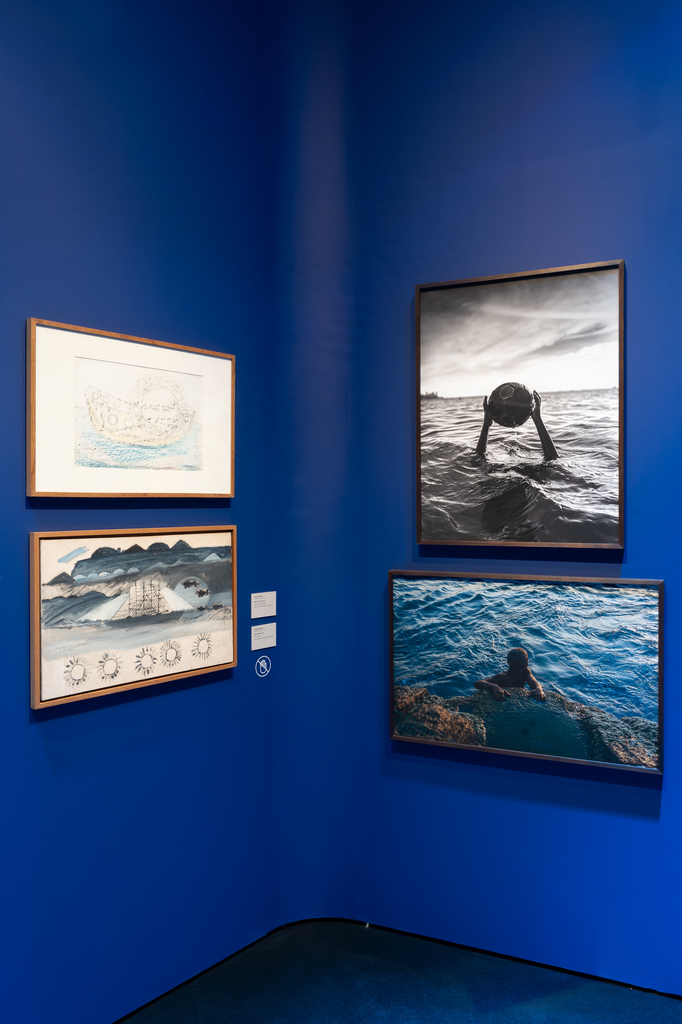
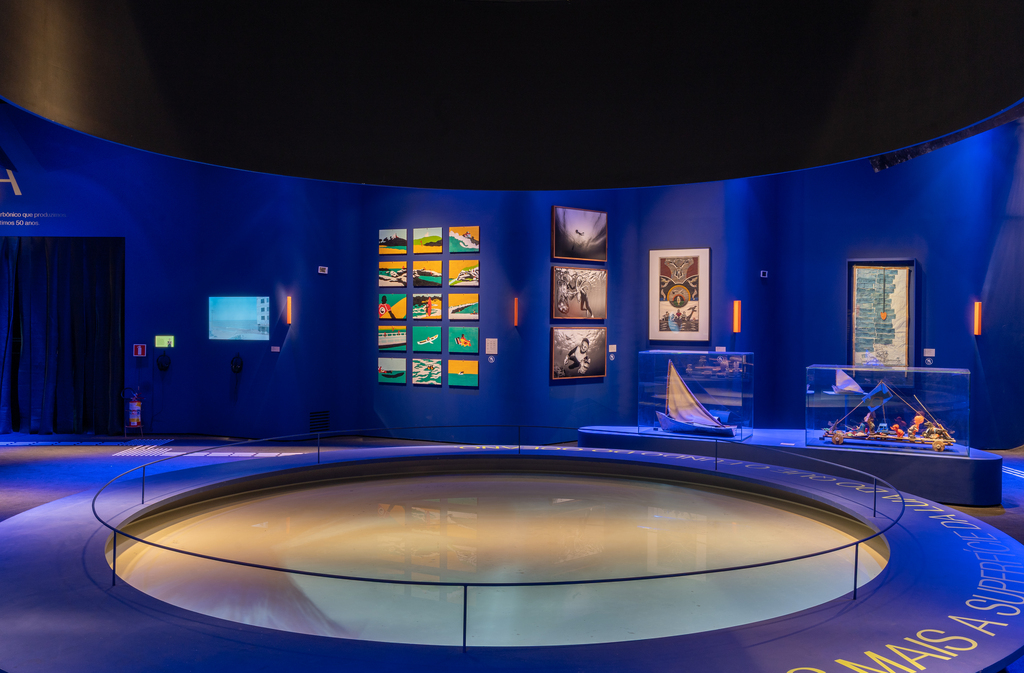
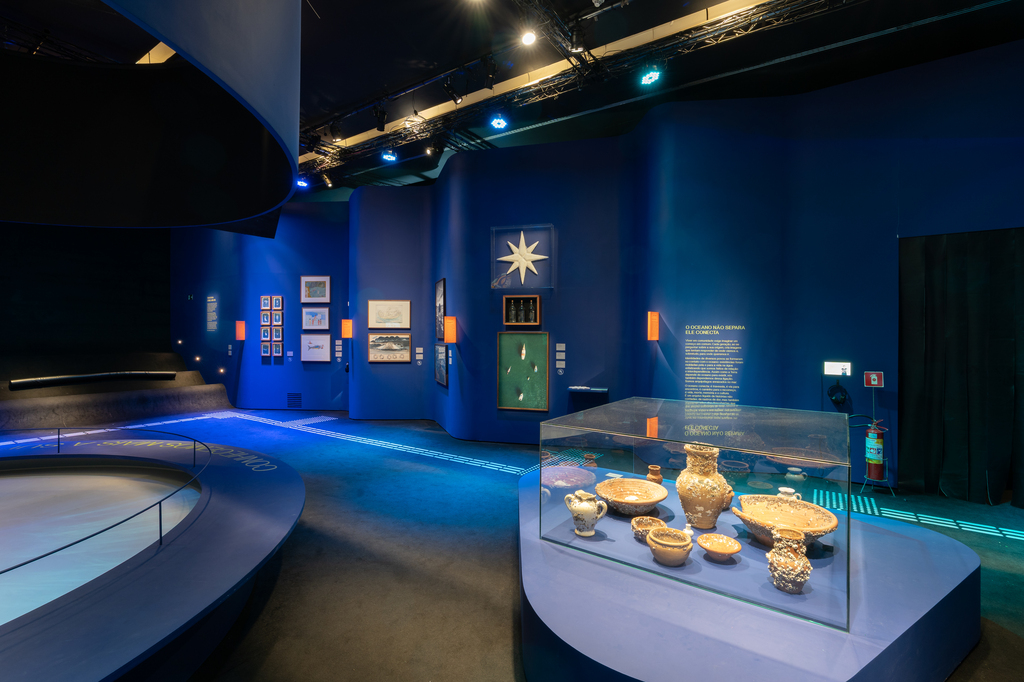
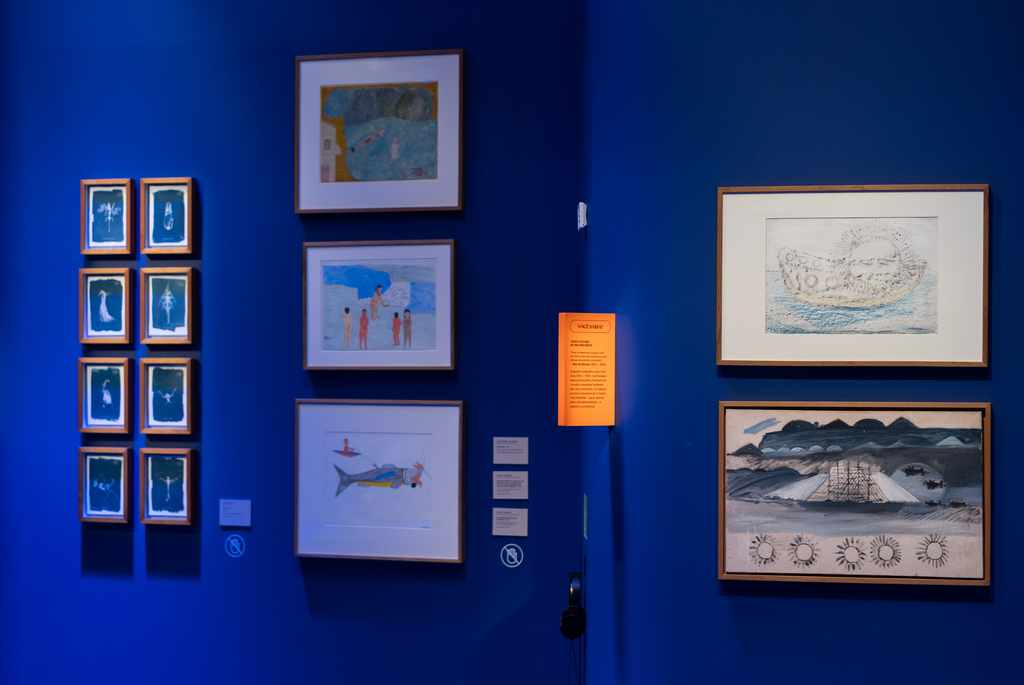
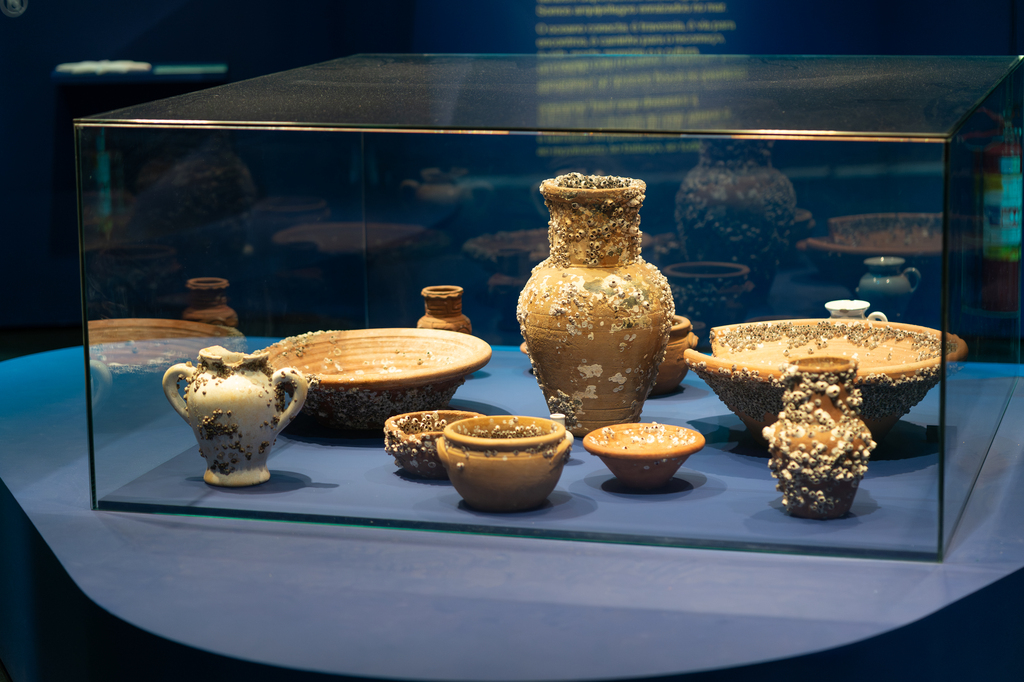
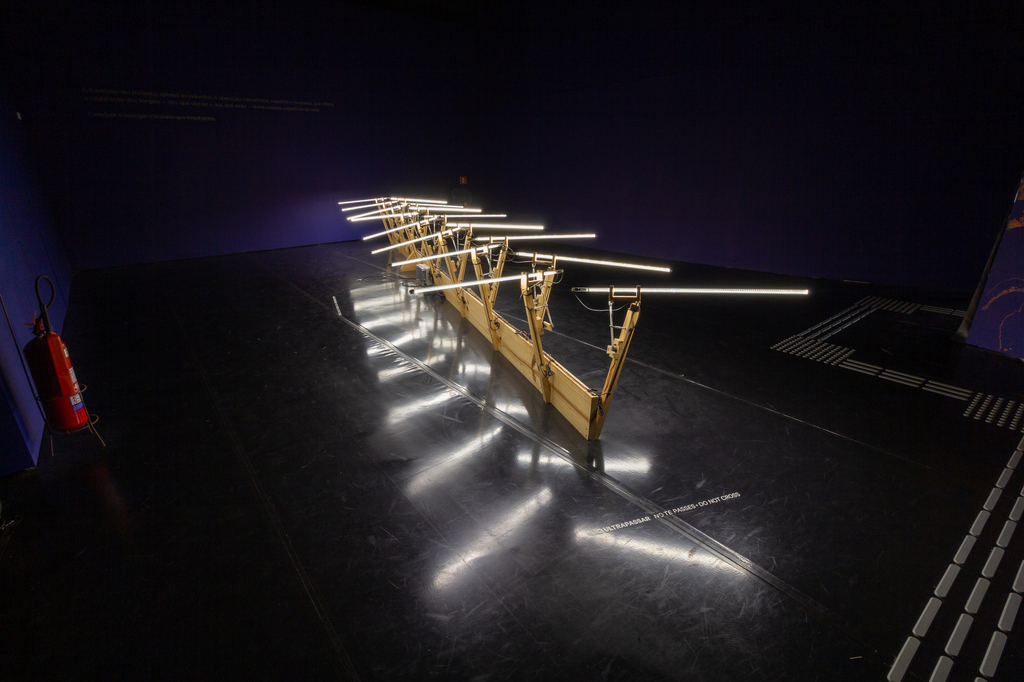
O percurso culmina em “Arquipélago” e “Naufrágio”, espaços que articulam arte, ciência e imaginação para discutir a relação entre a humanidade e o oceano. Enquanto Arquipélago reúne obras contemporâneas que exploram as conexões culturais, simbólicas e afetivas com o mar — entendido como “hidrovia que nos une” em escala planetária —, Naufrágio apresenta um ambiente de instabilidade em que palavras emergem e desaparecem na espuma projetada sobre o piso, representando comportamentos coletivos que precisamos abandonar para construirmos futuros mais sustentáveis. A instalação “Travessia, esforço coletivo” encerra o circuito com a metáfora de que navegar por outros futuros é um gesto necessariamente compartilhado.
A exposição “Oceano – O Mundo é um Arquipélago” tem curadoria de Fabio Scarano,
Camila Oliveira e Caetana Lara Resende.
The exhibition is structured around the themes of memory, attention, and anticipation, proposing a dialogue between human intelligence and oceanic intelligence. The exhibition “Ocean – The World is an Archipelago” stems from a fundamental premise: that life, in all its forms, is intelligent and that this intelligence is also manifested in the ocean depths. The exhibition revisits the ocean as our origin, recovering memories that connect us to the moment when the first organisms transformed the planet and produced the air we breathe. It's an invitation to experience this ancestry through sensory environments that simulate the light, texture, and movement of the waters. The exhibition develops from the themes of “Memory,” “Attention,” and “Anticipation,” aligned with UNESCO's “Seven Principles of Ocean Literacy,” which affirm the existence of a single global ocean and its decisive influence on the climate, the proliferation of life on Earth, and the diversity of ecosystems. These principles take shape in the exhibition rooms: in “Dive,” the public begins their journey in an environment that seeks to activate memories of origin and immersion. The room is almost entirely dark, with light and images of the water coming from above, to give the sensation of being underwater. In “Life,” the public encounters everything from microscopic organisms to giant species, such as the seven-meter orca skeleton – loaned to the exhibition by the National Museum – suspended in the main hall accompanied by mapped projections of the species; in “Edge,” the ocean is presented in a structure on the ceiling of the room as an attentive system, sensitive to human pressures, whose responses – such as the rise in sea level – reveal its intelligence and ecological agency. The journey culminates in “Archipelago” and “Shipwreck,” spaces that articulate art, science, and imagination to discuss the relationship between humanity and the ocean. While Archipelago brings together contemporary works that explore the cultural, symbolic, and affective connections with the sea—understood as a “waterway that unites us” on a planetary scale—Shipwreck presents an environment of instability in which words emerge and disappear in the foam projected onto the floor, representing collective behaviors that we need to abandon in order to build more sustainable futures. The installation “Crossing, a collective effort” concludes the circuit with the metaphor that navigating other futures is a necessarily shared gesture. The exhibition “Ocean – The World is an Archipelago” is curated by Fabio Scarano, Camila Oliveira, and Caetana Lara Resende.
The exhibition is structured around the themes of memory, attention, and anticipation, proposing a dialogue between human intelligence and oceanic intelligence. The exhibition “Ocean – The World is an Archipelago” stems from a fundamental premise: that life, in all its forms, is intelligent and that this intelligence is also manifested in the ocean depths. The exhibition revisits the ocean as our origin, recovering memories that connect us to the moment when the first organisms transformed the planet and produced the air we breathe. It's an invitation to experience this ancestry through sensory environments that simulate the light, texture, and movement of the waters. The exhibition develops from the themes of “Memory,” “Attention,” and “Anticipation,” aligned with UNESCO's “Seven Principles of Ocean Literacy,” which affirm the existence of a single global ocean and its decisive influence on the climate, the proliferation of life on Earth, and the diversity of ecosystems. These principles take shape in the exhibition rooms: in “Dive,” the public begins their journey in an environment that seeks to activate memories of origin and immersion. The room is almost entirely dark, with light and images of the water coming from above, to give the sensation of being underwater. In “Life,” the public encounters everything from microscopic organisms to giant species, such as the seven-meter orca skeleton – loaned to the exhibition by the National Museum – suspended in the main hall accompanied by mapped projections of the species; in “Edge,” the ocean is presented in a structure on the ceiling of the room as an attentive system, sensitive to human pressures, whose responses – such as the rise in sea level – reveal its intelligence and ecological agency. The journey culminates in “Archipelago” and “Shipwreck,” spaces that articulate art, science, and imagination to discuss the relationship between humanity and the ocean. While Archipelago brings together contemporary works that explore the cultural, symbolic, and affective connections with the sea—understood as a “waterway that unites us” on a planetary scale—Shipwreck presents an environment of instability in which words emerge and disappear in the foam projected onto the floor, representing collective behaviors that we need to abandon in order to build more sustainable futures. The installation “Crossing, a collective effort” concludes the circuit with the metaphor that navigating other futures is a necessarily shared gesture. The exhibition “Ocean – The World is an Archipelago” is curated by Fabio Scarano, Camila Oliveira, and Caetana Lara Resende.
Tipo de Exposição
Eixo temático
Conteúdo
Texto Curatorial
O mundo é um arquipélago
Um arquipélago é onde interdependência e diferença coexistem. As ilhas de um arquipélago devem “unir litorais e aproximar horizontes”, como dizia Édouard Glissant (1928–2011). Para o filósofo e professor da Martinica, o arquipélago é uma expressão de globalidade: o todo que produz diferenças capazes de dar origem ao novo em oposição à globalização, que padroniza e dilui. Se a terra está enraizada na água, como propôs Heráclito, o oceano é um só, no singular. As terras e nós (afinal, somos húmus – Homo) somos arquipélagos enraizados nesse mar. O oceano é o nó líquido que ata as partes. A utopia é justamente a busca pela realização dessa unidade plural.
Contudo, agimos na modernidade como se fôssemos ilhas absolutas, autônomas, seja individualmente, seja nos nossos continentes. “Não será nos isolando que combateremos a homogeneidade da globalização”, afirmava Glissant. Esse modo de vida desconectado da interdependência do mundo nos conduz a um estado de policrise (mudanças climáticas, perda de biodiversidade e guerras), cuja consequência inevitável é o naufrágio: uma ruptura que impõe transformações individuais e coletivas que levam ao surgimento de um novo estado de ser. O que emerge após o naufrágio é uma fértil combinação entre o vivo e o morto.
Nós, seres humanos, temos no corpo, mente e espírito as marcas do oceano: evolutivas, ecológicas, culturais e históricas. Nossa espécie tem um histórico de atenção e intimidade com o mar, que sempre proporcionou alimento, transporte e cultura. A ciência moderna ampliou muito nossa capacidade lógica e racional de antecipar cenários futuros, mas, ainda assim, mesmo diante das piores projeções, a sociedade moderna não sente o risco e hesita em mudar seus hábitos que poluem e degradam. Logo, dados e fatos sobre o estado do oceano não bastam para inspirar mudança. Precisamos sentir, e a fonte destes sentimentos são nossos “oceanos internos”.
Seriam essas “atitudes” oceânicas voluntárias? E se o oceano for capaz de agir? Agir pressupõe escolher e discernir, que é justo o que define inteligência. Seria o oceano inteligente? Tal qual tudo que é vivo, o oceano possui memória, atenção e antecipação: é a memória da origem da vida e dos mitos, é atento e reage às interferências da ação humana e antecipa futuros pós-naufrágio.
A exposição se ergue em torno dos eixos memória, atenção e antecipação, propondo um diálogo entre a inteligência humana e a inteligência oceânica. Como explica Clarice Lispector, somos “seres concomitantes”, reunimos em nós o passado, o presente e o futuro. Assim, a intenção não é tratar os temas de forma linear, mas sim meândrica, espiralar. Isso é feito combinando leituras e interpretações da ciência moderna com narrativas ancestrais de origem, usando arte e tecnologia. A expectativa é de restaurar a nossa relação com o oceano, relembrando que viemos dele, somos feitos dele, e que precisamos navegá-lo para dar origem a novos amanhãs. Assim, a exposição, mais que ensinar, nos faz sentir intimidade, respeito e familiaridade pelo oceano.
Fabio Scarano
Curador do Museu do Amanhã
The world is an archipelago
An archipelago is where interdependence and difference coexist. The islands of an archipelago should "unite coastlines and bring horizons closer," as Édouard Glissant (1928–2011) said. For the philosopher and professor from Martinique, the archipelago is an expression of globality: the whole that produces differences capable of giving rise to the new, in opposition to globalization, which standardizes and dilutes. If the earth is rooted in water, as Heraclitus proposed, the ocean is one, in the singular. The lands and we (after all, we are humus – Homo) are archipelagos rooted in this sea. The ocean is the liquid knot that binds the parts. Utopia is precisely the search for the realization of this plural unity.
However, in modernity we act as if we were absolute, autonomous islands, whether individually or on our continents. “We will not combat the homogeneity of globalization by isolating ourselves,” Glissant stated. This way of life, disconnected from the interdependence of the world, leads us to a state of polycrisis (climate change, biodiversity loss, and wars), whose inevitable consequence is shipwreck: a rupture that imposes individual and collective transformations leading to the emergence of a new state of being. What emerges after the shipwreck is a fertile combination of the living and the dead.
We, human beings, bear the marks of the ocean in our bodies, minds, and spirits: evolutionary, ecological, cultural, and historical. Our species has a history of attention and intimacy with the sea, which has always provided food, transportation, and culture. Modern science has greatly expanded our logical and rational capacity to anticipate future scenarios, but even so, even in the face of the worst projections, modern society does not feel the risk and hesitates to change its polluting and degrading habits. Therefore, data and facts about the state of the ocean are not enough to inspire change. We need to feel, and the source of these feelings are our “inner oceans.”
Are these oceanic “attitudes” voluntary? What if the ocean is capable of acting? Acting presupposes choosing and discerning, which is precisely what defines intelligence. Is the ocean intelligent? Like everything that is alive, the ocean possesses memory, attention, and anticipation: it is the memory of the origin of life and myths, it is attentive and reacts to the interferences of human action, and it anticipates post-shipwreck futures.
The exhibition is built around the axes of memory, attention, and anticipation, proposing a dialogue between human intelligence and oceanic intelligence. As Clarice Lispector explains, we are “concomitant beings,” we bring together within ourselves the past, the present, and the future. Thus, the intention is not to treat the themes linearly, but rather meanderingly, spiraling. This is done by combining readings and interpretations of modern science with ancestral narratives of origin, using art and technology. The expectation is to restore our relationship with the ocean, reminding us that we come from it, are made of it, and that we need to navigate it to give rise to new tomorrows. Thus, the exhibition, more than teaching, makes us feel intimacy, respect, and familiarity with the ocean.
Fabio Scarano
Curator of the Museum of Tomorrow
Palavra-chave
Assets
Imagem31
Relações
Atividade relacionada
Taxonomia
É parte de
Item do acervo