
Informações gerais
Código
MDA.EXP.00082
Nome
A BELEZA ESCONDIDA DA MATEMÁTICA
The Hidden Beauty of Mathematics
The Hidden Beauty of Mathematics
Descrição
A exposição virtual "A Beleza Escondida da Matemática", disponível na plataforma Google Arts & Culture, e com curadoria do Museu do Amanhã, investiga a onipresença dos princípios matemáticos na natureza, na arte, na arquitetura e nos fenômenos físicos.
A narrativa estrutura-se em torno de conceitos fundamentais como simetria (bilateral, radial, esférica e birradial), proporção áurea, sequências de Fibonacci, fractais e formas geométricas platônicas, demonstrando como tais estruturas operam tanto na composição de elementos naturais – como conchas de nautilus, inflorescências e cristais – quanto na concepção estética e científica de diferentes civilizações ao longo da história.
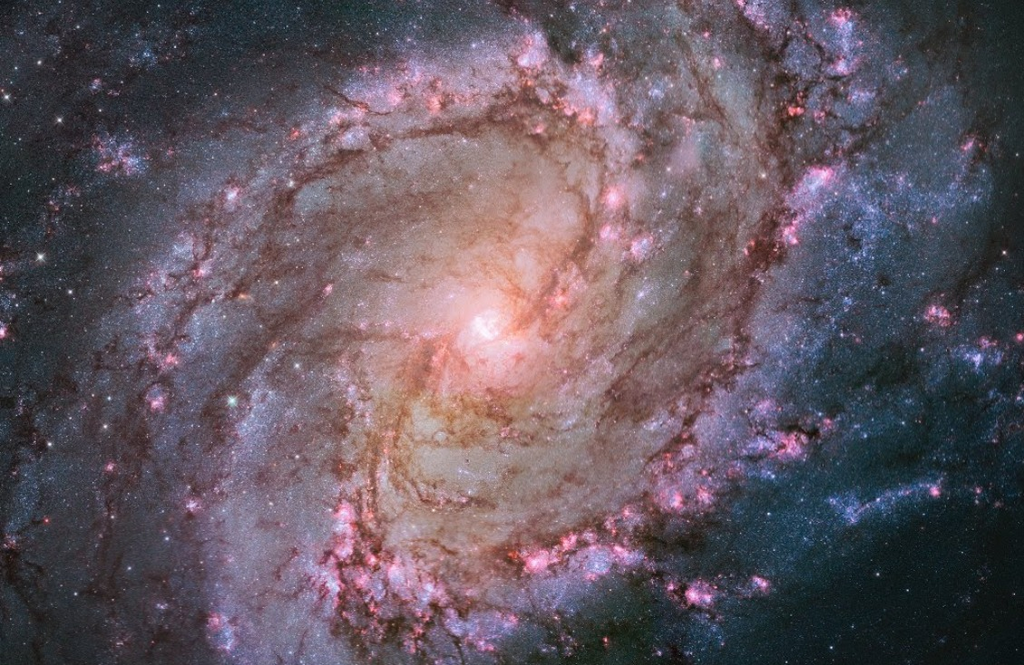
A mostra organiza-se por meio de eixos temáticos que articulam desde a geometria presente em sólidos,descritos por Platão, até a aplicação contemporânea de fractais na modelagem de sistemas complexos. A interface combina recursos multimídia – incluindo imagens de satélite, microfotografias, visualizações 3D interativas e exemplares de arquitetura islâmica e biologia marinha – para ilustrar a recorrência de padrões matemáticos em múltiplas escalas, da formação de galáxias à morfologia de vegetais como a couve-flor romanesca, destacando o papel da simetria como princípio organizador da matéria e do pensamento formal.
Com curadoria apoiada por consultores do Instituto de Matemática e Estatística da USP e da Universidade Federal do Rio de Janeiro, a exposição oferece uma análise técnica e visualmente fundamentada sobre a relação entre matemática e percepção estética, sublinhando que a identificação de proporções e simetrias na natureza não apenas embasa o conhecimento científico, mas também amplia a experiência de admiração e complexidade diante do mundo natural. A abordagem integra filosofia, biologia, física e arte para evidenciar como padrões matemáticos funcionam como linguagem estruturante da realidade.
The virtual exhibition "The Hidden Beauty of Mathematics," available on the Google Arts & Culture platform and curated by the Museum of Tomorrow, investigates the omnipresence of mathematical principles in nature, art, architecture, and physical phenomena. The narrative is structured around fundamental concepts such as symmetry (bilateral, radial, spherical, and biradial), the golden ratio, Fibonacci sequences, fractals, and Platonic geometric forms, demonstrating how such structures operate both in the composition of natural elements – such as nautilus shells, inflorescences, and crystals – and in the aesthetic and scientific conception of different civilizations throughout history. The exhibition is organized through thematic axes that articulate everything from the geometry present in solids, as described by Plato, to the contemporary application of fractals in the modeling of complex systems. The interface combines multimedia resources – including satellite imagery, microphotographs, interactive 3D visualizations, and examples of Islamic architecture and marine biology – to illustrate the recurrence of mathematical patterns at multiple scales, from the formation of galaxies to the morphology of plants such as Romanesco cauliflower, highlighting the role of symmetry as an organizing principle of matter and formal thought. Curated with the support of consultants from the Institute of Mathematics and Statistics at USP and the Federal University of Rio de Janeiro, the exhibition offers a technically and visually grounded analysis of the relationship between mathematics and aesthetic perception, emphasizing that the identification of proportions and symmetries in nature not only underpins scientific knowledge but also expands the experience of wonder and complexity in the face of the natural world. The approach integrates philosophy, biology, physics, and art to demonstrate how mathematical patterns function as a structuring language of reality.
The virtual exhibition "The Hidden Beauty of Mathematics," available on the Google Arts & Culture platform and curated by the Museum of Tomorrow, investigates the omnipresence of mathematical principles in nature, art, architecture, and physical phenomena. The narrative is structured around fundamental concepts such as symmetry (bilateral, radial, spherical, and biradial), the golden ratio, Fibonacci sequences, fractals, and Platonic geometric forms, demonstrating how such structures operate both in the composition of natural elements – such as nautilus shells, inflorescences, and crystals – and in the aesthetic and scientific conception of different civilizations throughout history. The exhibition is organized through thematic axes that articulate everything from the geometry present in solids, as described by Plato, to the contemporary application of fractals in the modeling of complex systems. The interface combines multimedia resources – including satellite imagery, microphotographs, interactive 3D visualizations, and examples of Islamic architecture and marine biology – to illustrate the recurrence of mathematical patterns at multiple scales, from the formation of galaxies to the morphology of plants such as Romanesco cauliflower, highlighting the role of symmetry as an organizing principle of matter and formal thought. Curated with the support of consultants from the Institute of Mathematics and Statistics at USP and the Federal University of Rio de Janeiro, the exhibition offers a technically and visually grounded analysis of the relationship between mathematics and aesthetic perception, emphasizing that the identification of proportions and symmetries in nature not only underpins scientific knowledge but also expands the experience of wonder and complexity in the face of the natural world. The approach integrates philosophy, biology, physics, and art to demonstrate how mathematical patterns function as a structuring language of reality.
Tipo de Exposição
Eixo temático
Conteúdo
Texto Curatorial
A Matemática está em todo lugar. Nos objetos que criamos, nas obras de arte que admiramos. Ela também está, por mais que não percebamos, na natureza que nos envolve em suas paisagens e espécies vegetais e animais, inclusive a espécie humana. Nossa atração por outros humanos e mesmo nossa locomoção depende dela. Mas como isso acontece?
Da estrutura de prédios à descoberta de novos planetas, de transações comerciais à Moda e às novas tecnologias, a Matemática sempre teve seu lugar como ferramenta importante no avanço da ciência e da técnica em campos tão diversos como as Engenharias, Biologia, Filosofia e Artes. E também está presente na natureza, escondendo – e mostrando – seus encantos sob diversas formas, intrigando pesquisadores e inspirando poetas. Uma das ideias que melhor materializa a Matemática em toda a sua elegância é o conceito de simetria.
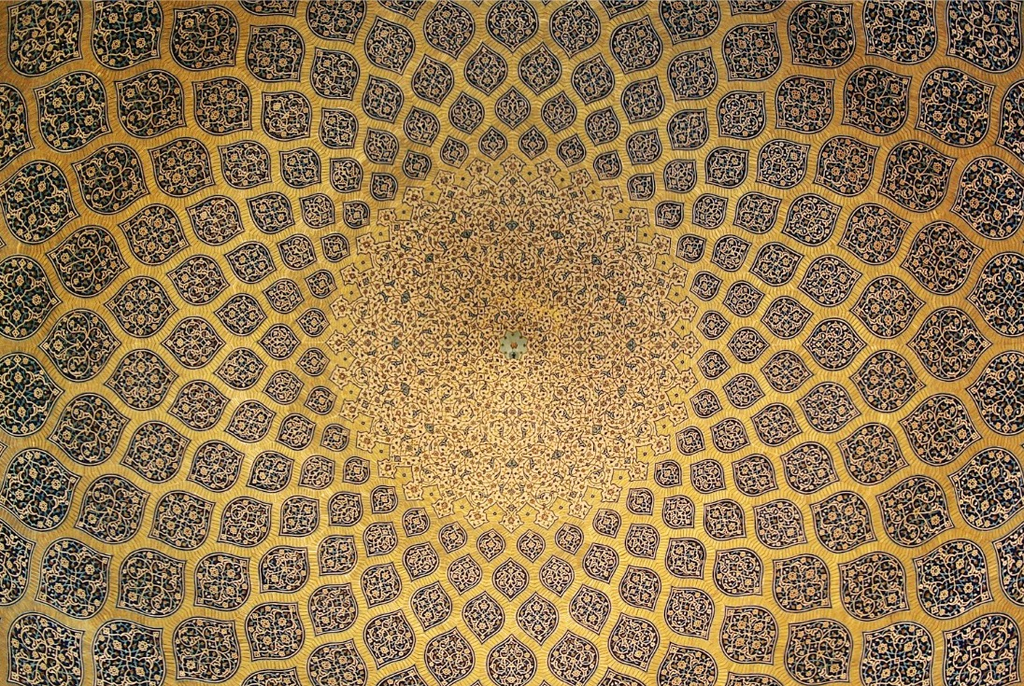
O teto da mesquita de Lotfollah em Isfahan (Irã) é um grande exemplo de simetria empregada com beleza na arquitetura.
Harmonia e beleza
Um objeto é simétrico quando existe uma “harmonia de proporções” de suas partes em relação ao todo: altura, largura e comprimento têm uma relação equilibrada entre si. Estritamente relacionada à harmonia e beleza, a simetria é também um conceito decisivo nas teorias sobre a natureza. Na Grécia Antiga o conceito floresceu e nos influencia até hoje.
O Dicionário de Filosofia Stanford lembra que no Timeu, obra do filósofo grego Platão (429 - 347 AEC - antes da Era Comum), por exemplo, formas geométricas regulares têm lugar central na doutrina dos elementos naturais pelas proporções que contêm e pela beleza de suas formas. Os quatro elementos - fogo, água, terra e ar - poderiam ser representados por formas geométricas regulares (com poliedros de quatro, vinte, seis e oito faces iguais, respectivamente) e mesmo o Universo também poderia ser representado por um poliedro de doze faces - ou um dodecaedro simétrico. Partículas com estas diferentes formas, combinadas, dariam origem a todos os elementos naturais que conhecemos. Por mais que não existisse “simetria” enquanto palavra ou termo no vocabulário grego na época em que Platão viveu, o conceito já estava em gestação. O substantivo grego “summetria”, literalmente “da mesma medida”, já era usado em referência à “proporção".
A proporção áurea
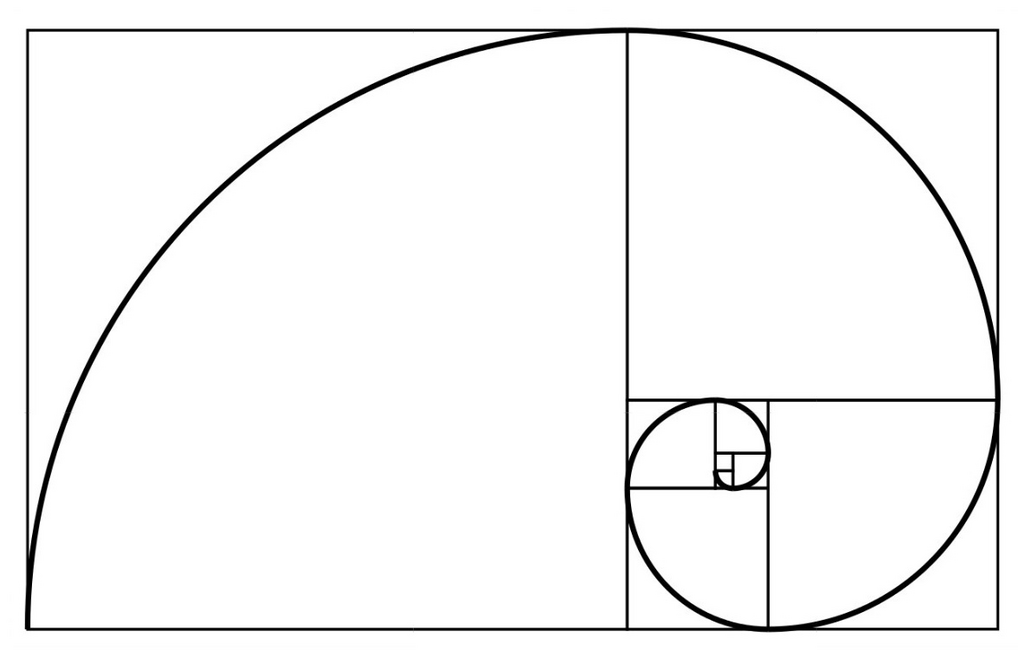
Há quem diga que o tamanho e a proporção dos sólidos perfeitos descritos por Platão têm uma relação entre si - as faces das partículas de fogo, água e ar poderiam ser combinadas entre si por serem proporcionais. Teriam, entre elas, a “proporção áurea” - ou um tipo de simetria que marca o ritmo de crescimento no desenvolvimento de diversas espécies. As folhas de uma árvore, por exemplo, depois de nascida a primeira, se multiplicam mais ou menos nesta velocidade: 2, 3, 5, 8, 13, 21, 34, 55… e daí por diante. O último número é sempre a soma dos dois antecessores -- e dividindo cada número pelo seu antecessor, o resultado vai ser bem próximo de 1,6180, ou o que matemáticos como o italiano Leonardo Fibonacci (1175 - 1250) consideram como “a proporção áurea”. Esta sequência de números - sempre com a razão áurea entre eles - quando aplicada a uma sucessão de quadrados proporcionais dentro de um retângulo, gera um “retângulo de ouro”. Se traçarmos uma linha, formada por quartos de círculo, seguindo a progressão das figuras formadas nele, temos a “espiral áurea”, como no desenho ao lado.
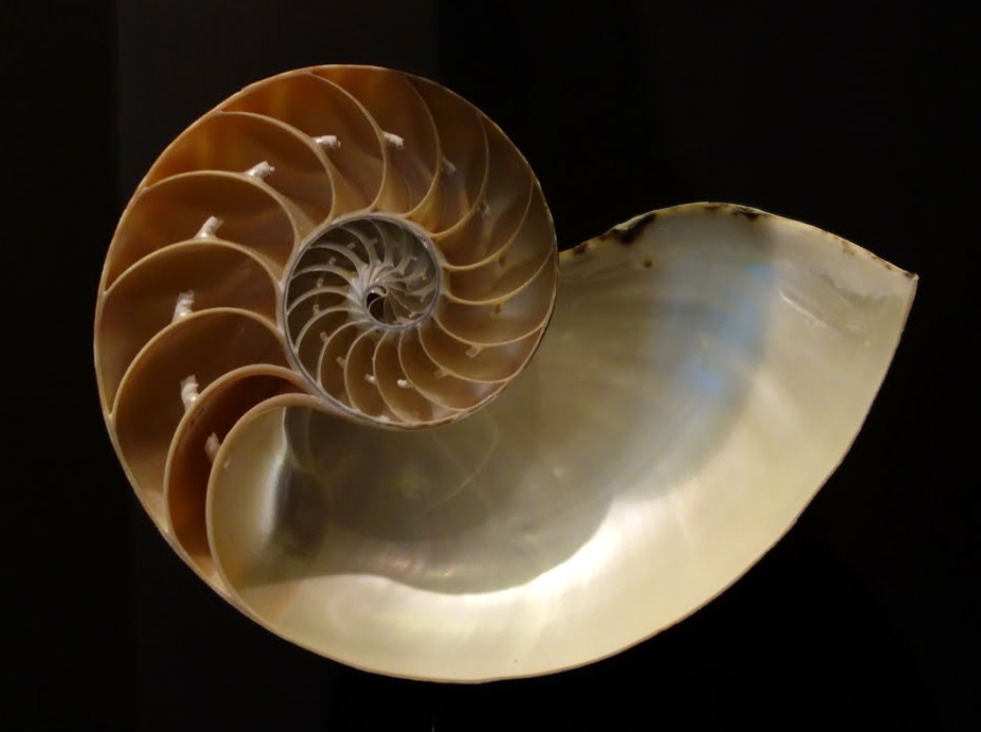
Na natureza, este tipo de simetria marca o ritmo de crescimento no desenvolvimento de diversas espécies - e também se manifesta perceptível a olho nu, se enquadrando também nas regras que determinam a concepção de “belo” na arte. O maior exemplo de materialização da espiral áurea na natureza talvez seja o náutilo, molusco de origem pré-histórica que ainda tem ‘parentes’ vivos no Oceano Pacífico.
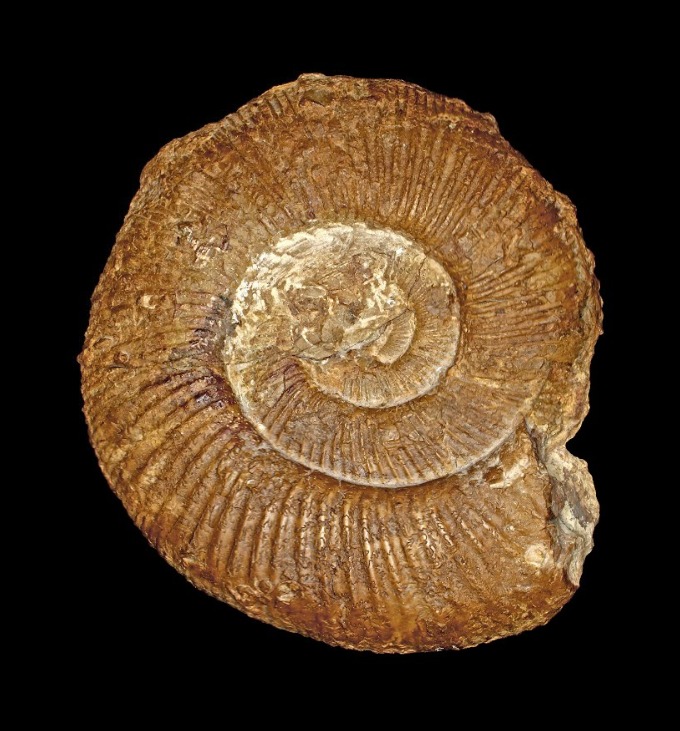
Os náutilos são um tipo de espécie sobrevivente da subclasse arcaica dos nautoloides que apareceram no início do Paleozóico - muito antes dos dinossauros e antes mesmo da aparição dos primeiros animais terrestres. A subclasse prima das ammonoidea contava com a espécie extinta dos amonitas - muito queridos dos aficionados por fósseis - que também exibiam a proporção áurea em suas conchas.
Iguais, mas diferentes?
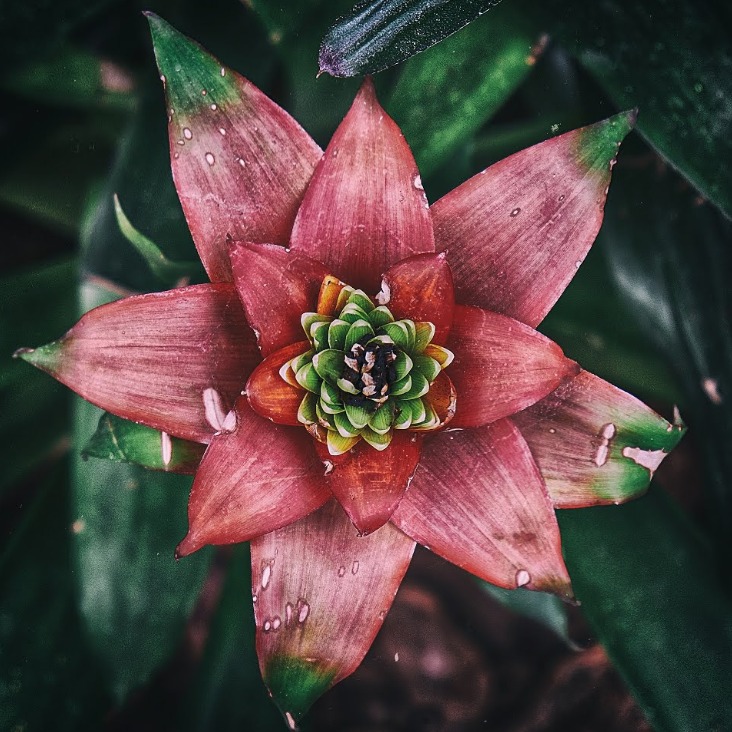
Existem, também, diversas outras formas de simetria visíveis na natureza. Há o tipo de simetria bilateral, como o reflexo de uma imagem em um lago que pode ser dividida em duas partes idênticas; e também pode ser radial, quando a imagem se forma no entorno de um ponto central e se “irradia” para todos os lados, como uma flor aberta ou um dente-de-leão amarelo. A simetria também se manifesta em formas complexas como fractais, em que uma estrutura em sua parte é parecida com o todo em qualquer escala. E ainda, no caso de sons e ondas de mesma frequência, não é exagero dizer que os sons e luzes sejam, também, simétricos. No mundo natural, as simetrias não são completamente perfeitas, abrigando algumas imperfeições visíveis.
Segundo o professor do IME-USP Eduardo Colli, “o nosso olhar busca as simetrias, mesmo que na natureza elas não sejam perfeitas. Na verdade, a maior beleza nas simetrias da natureza está nessas pequenas imperfeições”.
A beleza bilateral
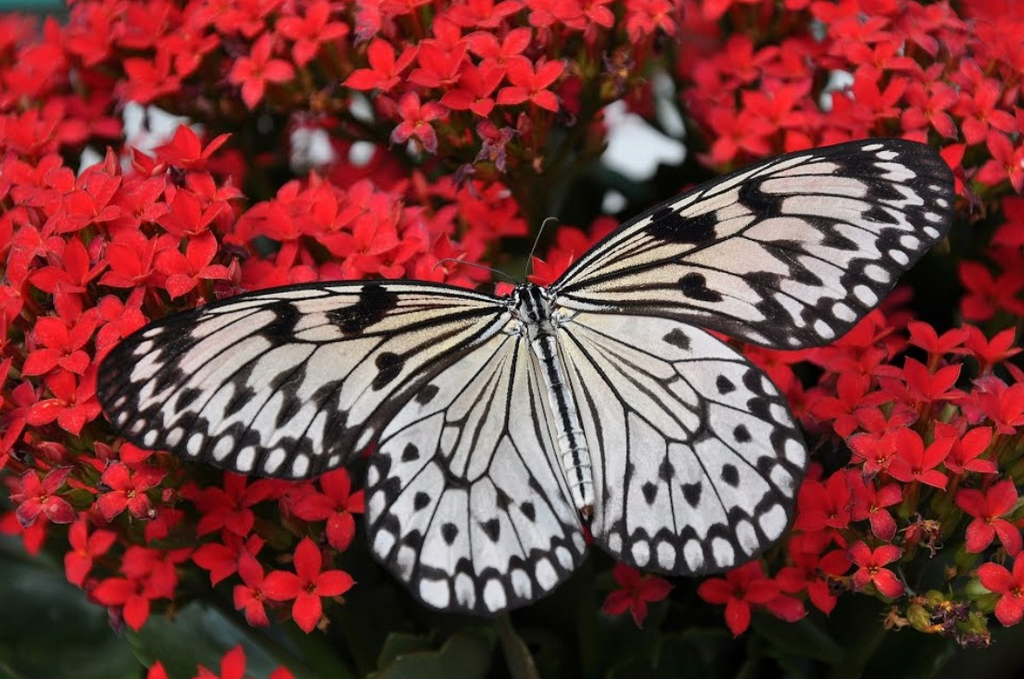
Uma das principais simetrias existentes na natureza é a bilateral. Nela, um lado do corpo da planta ou animal é uma cópia muito aproximada do outro, como se existisse um plano capaz de dividir a imagem em dois lados - ou duas imagens quase refletidas. Esta morfologia, não raramente, tem uma função clara: seria bastante difícil para um pássaro voar em linha reta se o tamanho de suas asas não fosse aproximadamente o mesmo, por exemplo.
Esferas, esferas
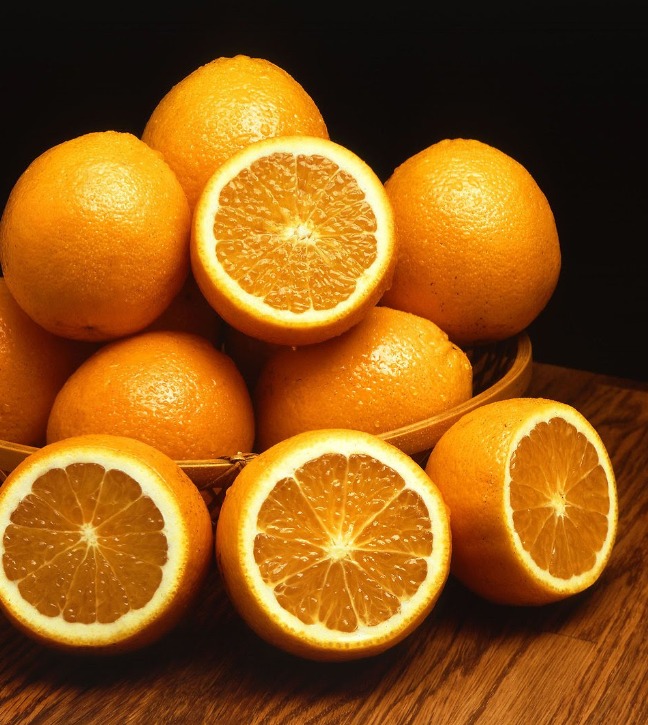
Um objeto é esfericamente simétrico se é possível cortá-lo e obter duas metades iguais - independente da direção do corte, desde que passe pelo centro dele. Frutas como as laranjas e alguns limões têm um formato muito próximo do esférico.
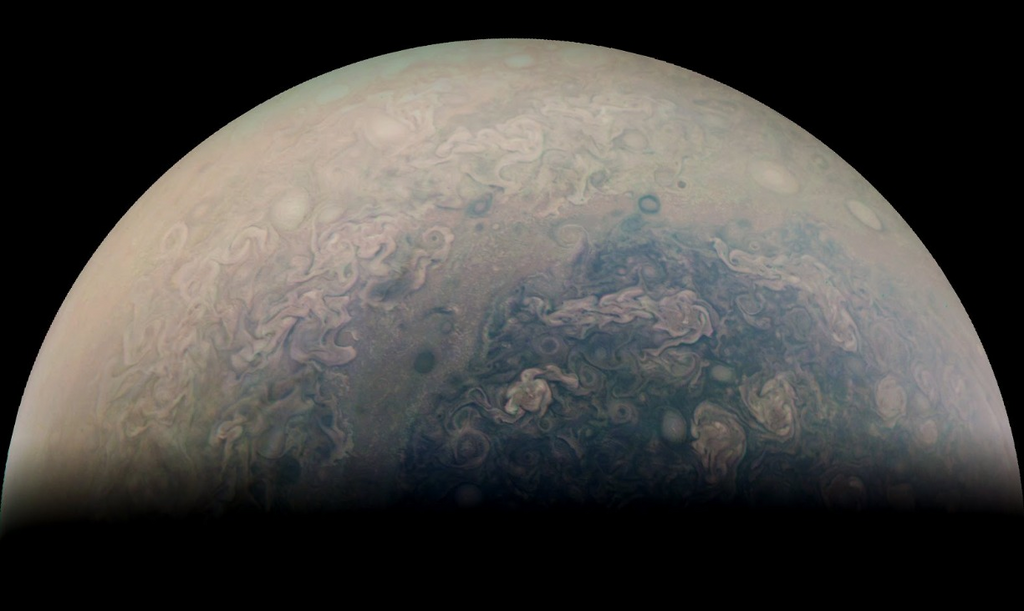
Para Platão, a esfera era a forma mais simétrica e homogênea que existe. E seria, portanto, a forma mais bela e mais perfeita de todas. O Cosmos, segundo ele, tinha forma esférica - e assim também os corpos celestes, como o planeta Júpiter, que vemos na imagem.
Segundo o matemático da UFRJ Graham Smith, “os físicos de hoje em dia acreditam que a chamada ‘constante cosmológica’ é positiva, o que significa que, na escala do universo, o Cosmos realmente pode ser uma esfera. Seria uma esfera espaço-temporal de quarta dimensão - mas mesmo assim parece que Platão não estava tão errado, afinal!”
Formas radiais
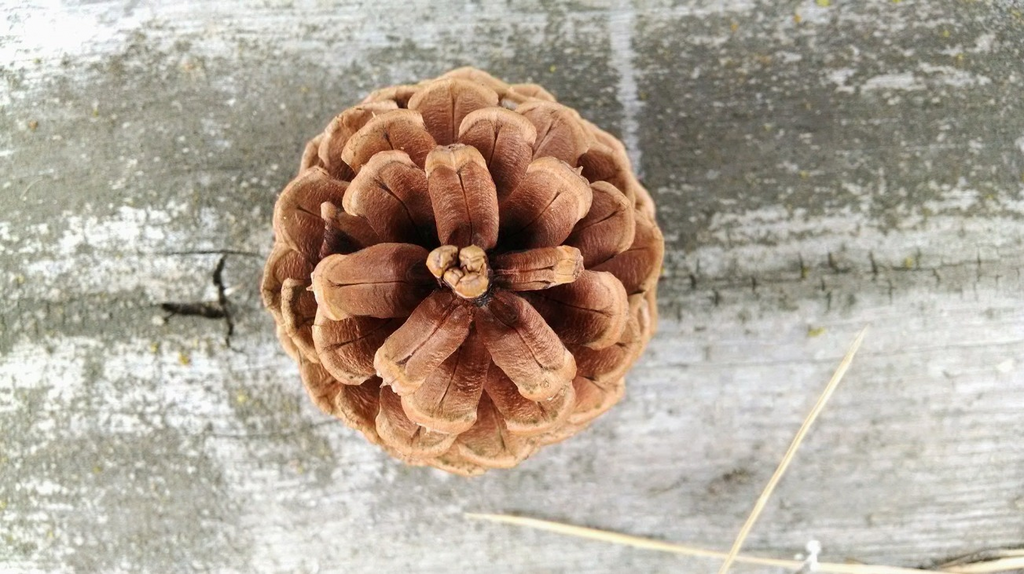
Um corpo tem simetria radial se, ao ser cortado várias vezes, gera pedaços iguais. Ou se é possível “rodá-lo” em torno de um eixo central e obter um efeito de círculo. A principal diferença em relação às formas esféricas é que, no caso das esferas, não existe um lado “para cima” nem um lado “para baixo”, como em um disco mais ou menos plano. Nas formas radiais, estes lados existem.
Um misto de simetrias
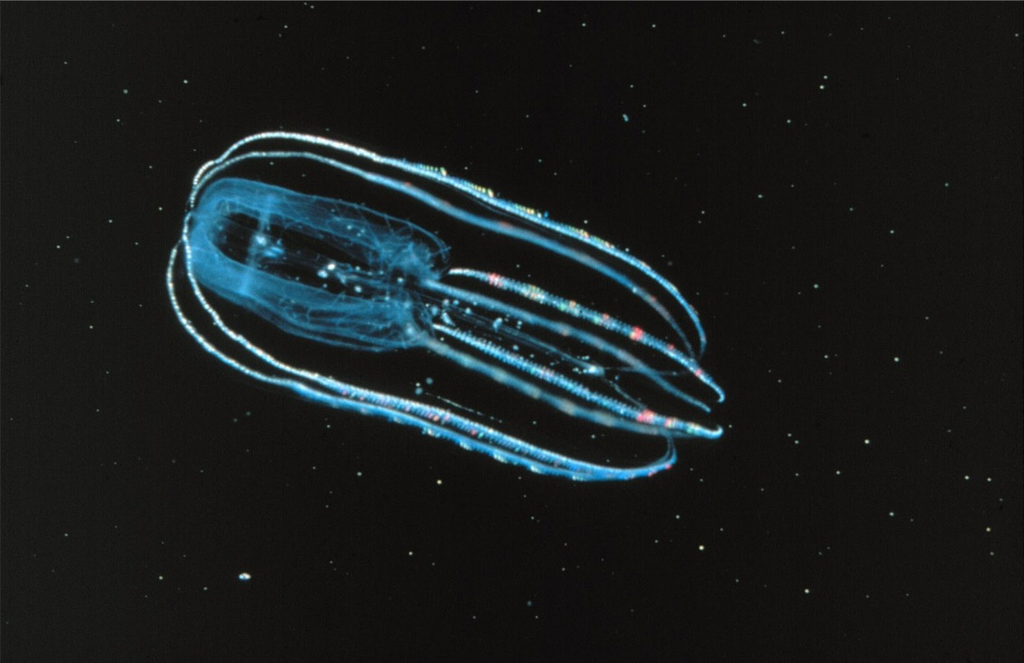
Há formas ou espécies que combinam mais de um tipo de simetria. As espécies birradiais, por exemplo, combinam as simetrias radial e bilateral. Elas não são muito comuns na natureza, e talvez um dos melhores representantes deste tipo de formato são as águas-vivas-de-pente ou carambolas-do-mar. Estes animais marinhos, que lembram as águas-vivas, têm seus lados opostos simétricos - mas cada lado é diferente do seu adjacente. Ou seja: se fosse uma figura geométrica, uma carambola-do-mar poderia ser facilmente representada por um retângulo: os lados de cima e de baixo são iguais. No entanto, são diferentes de seu lado direito e esquerdo (que também são iguais). Se todos os lados fossem exatamente iguais, a figura não seria mais um retângulo, e sim um quadrado.
Formas quebráveis
“Fractal”, termo cunhado pelo matemático francês Benoît Mandelbrot em meados da década de 1970, vem do latim “fractus”, ou “quebrado”. Isso explica a lógica da geometria de um fractal: é uma estrutura que tem simetria por escala. Qualquer parte de um fractal, por menor que seja, tem o mesmo formato da figura inteira.
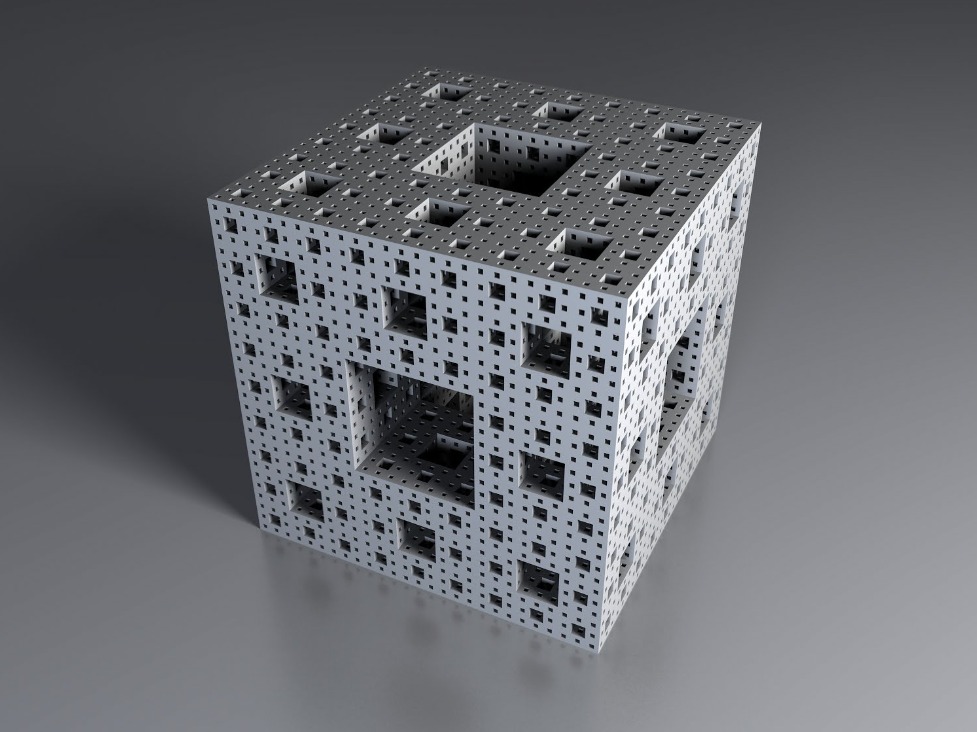
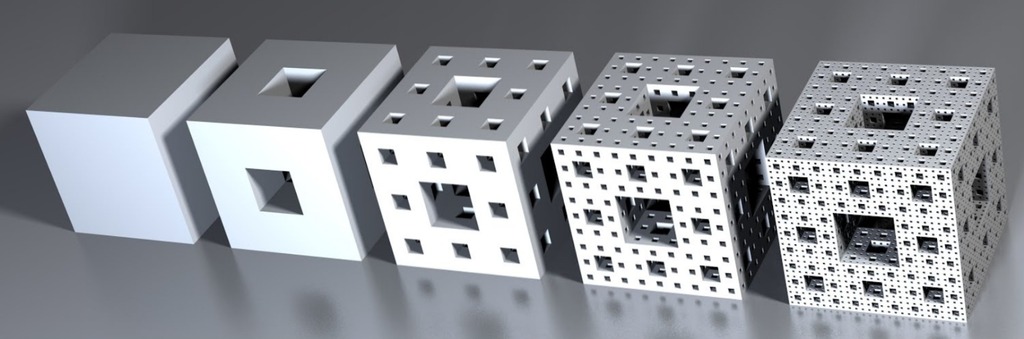
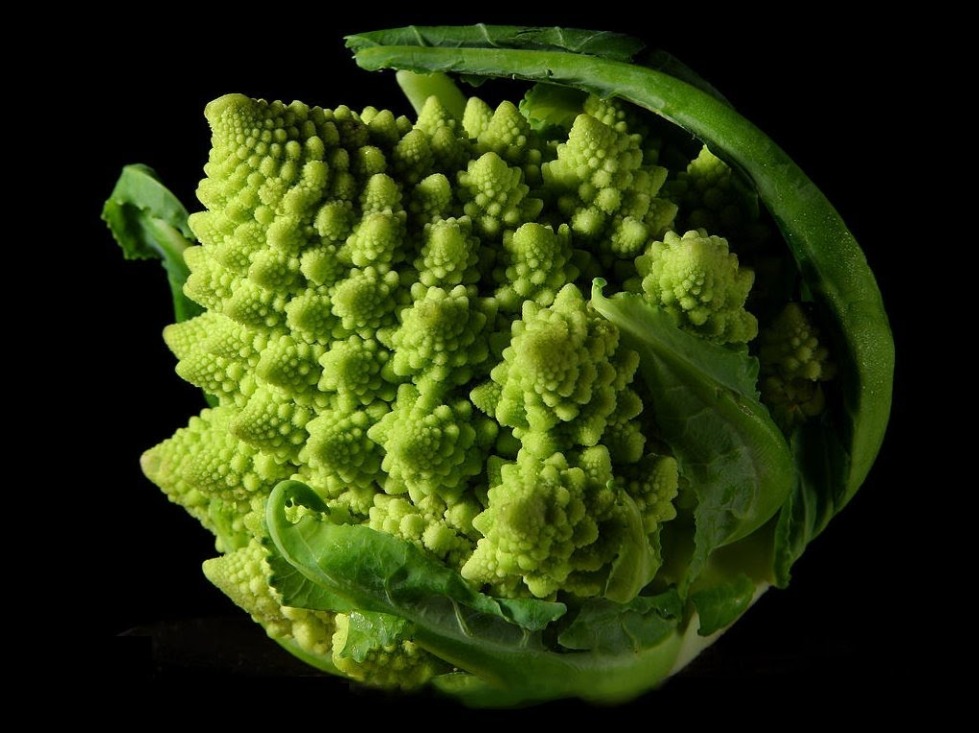
Um bom exemplo é o cubo, muito conhecido por Esponja de Menger, que leva este nome em homenagem ao matemático austríaco Karl Menger, que, no século passado, estudou a topologia de objetos geométricos. É possível obter a Esponja de Menger ao se retirar a parte central de um cubo e se repetir o processo algumas vezes em escala cada vez menor. Provavelmente a melhor representação de formas fractais na natureza seja a couve-brócoli romanesco.
Simetrias em outra dimensão
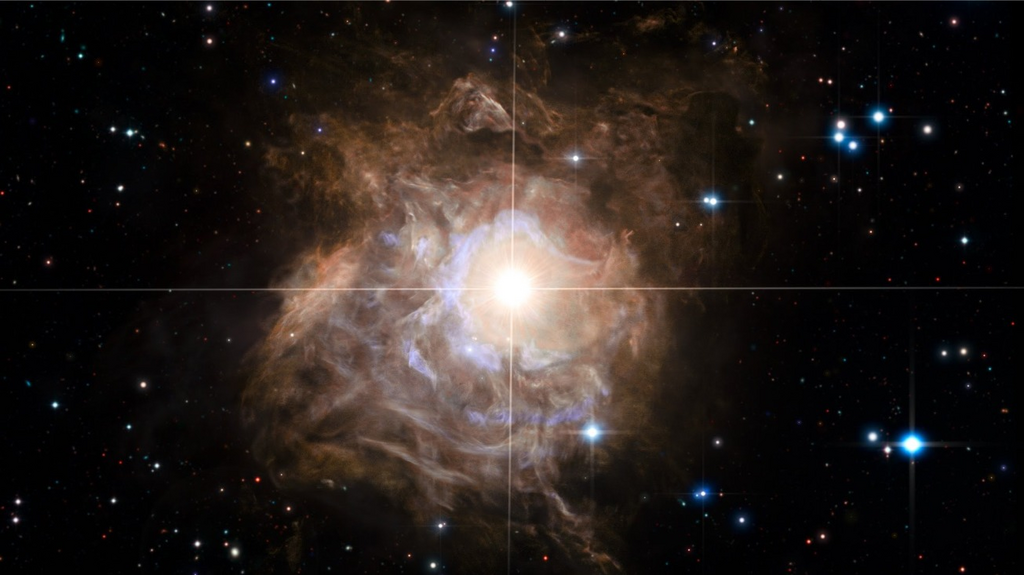
Nem todas as simetrias que conhecemos acontecem na dimensão espacial, na forma de figuras geométricas ou formas encontradas na natureza. Simetrias também existem no mundo natural de outras formas que podemos ver, ouvir e sentir. Luz e som, por exemplo, se comportam em forma de onda - e podemos dizer que são, por isso, simétricos quando seu comprimento de onda é regular. Sua simetria não se dá no espaço como uma figura geométrica que podemos ver -- com sua pulsação, luz e som são simétricos no tempo. Algumas estrelas, por exemplo, têm variações de brilho -- ou pulsações -- regulares. A RS Puppis, localizada perto do centro da nossa Via Láctea, é uma delas: sua periodicidade de pulsação é de 40 dias, aproximadamente.
Simetrias estão por todos os lugares o tempo todo. Basta olhar ao redor para perceber que elas nos cercam e, além de dar mais graça e beleza ao nosso cotidiano, também têm muitas funções de que não nos damos conta. A natureza esconde números, equações e proporções que podem ser desvendados por qualquer pessoa que tenha curiosidade. Como disse o célebre físico Richard Feynman, “o conhecimento da ciência apenas enriquece a empolgação, o mistério e a admiração” da natureza. E não tira sua beleza.
Mathematics is everywhere. In the objects we create, in the works of art we admire. It is also present, even if we don't realize it, in the nature that surrounds us in its landscapes and plant and animal species, including the human species. Our attraction to other humans and even our locomotion depend on it. But how does this happen?
From the structure of buildings to the discovery of new planets, from commercial transactions to fashion and new technologies, mathematics has always had its place as an important tool in the advancement of science and technology in fields as diverse as engineering, biology, philosophy, and the arts. It is also present in nature, hiding – and revealing – its charms in various forms, intriguing researchers and inspiring poets. One of the ideas that best embodies mathematics in all its elegance is the concept of symmetry.
The ceiling of the Lotfollah Mosque in Isfahan (Iran) is a great example of symmetry employed with beauty in architecture.
Harmony and Beauty
An object is symmetrical when there is a "harmony of proportions" of its parts in relation to the whole: height, width, and length have a balanced relationship with each other. Closely related to harmony and beauty, symmetry is also a decisive concept in theories about nature. In Ancient Greece, the concept flourished and influences us to this day.
The Stanford Dictionary of Philosophy reminds us that in Timaeus, a work by the Greek philosopher Plato (429-347 BCE), for example, regular geometric forms have a central place in the doctrine of natural elements because of the proportions they contain and the beauty of their forms. The four elements—fire, water, earth, and air—could be represented by regular geometric forms (with polyhedra of four, twenty, six, and eight equal faces, respectively), and even the Universe could also be represented by a polyhedron of twelve faces—or a symmetrical dodecahedron. Particles with these different forms, combined, would give rise to all the natural elements we know. Although the word "symmetry" didn't exist as a term in the Greek vocabulary during Plato's time, the concept was already developing. The Greek noun "summetria," literally "of the same measure," was already used in reference to "proportion."
The Golden Ratio
Some argue that the size and proportion of the perfect solids described by Plato are related – the faces of the particles of fire, water, and air could be combined because they are proportional. They would have, among themselves, the "golden ratio" – or a type of symmetry that marks the rhythm of growth in the development of various species. The leaves of a tree, for example, after the first one is born, multiply more or less at this rate: 2, 3, 5, 8, 13, 21, 34, 55… and so on. The last number is always the sum of its two predecessors – and dividing each number by its predecessor, the result will be very close to 1.6180, or what mathematicians like the Italian Leonardo Fibonacci (1175-1250) consider the "golden ratio". This sequence of numbers – always with the golden ratio between them – when applied to a succession of proportional squares within a rectangle, generates a "golden rectangle". If we draw a line, formed by quarter circles, following the progression of the figures formed within it, we have the "golden spiral", as in the drawing to the side.
In nature, this type of symmetry marks the rhythm of growth in the development of various species – and is also perceptible to the naked eye, fitting into the rules that determine the conception of "beauty" in art. Perhaps the greatest example of the materialization of the golden spiral in nature is the nautilus, a mollusk of prehistoric origin that still has living 'relatives' in the Pacific Ocean. Nautiluses are a type of surviving species from the archaic subclass of nautiloids that appeared at the beginning of the Paleozoic era – long before the dinosaurs and even before the appearance of the first land animals. The related subclass, ammonoidea, included the extinct species of ammonites – much loved by fossil enthusiasts – which also exhibited the golden ratio in their shells.
Similar, yet different?
There are also several other forms of symmetry visible in nature. There is bilateral symmetry, like the reflection of an image in a lake that can be divided into two identical parts; and it can also be radial, when the image forms around a central point and "radiates" in all directions, like an open flower or a yellow dandelion. Symmetry also manifests itself in complex forms such as fractals, where a structure in its part is similar to the whole at any scale. Furthermore, in the case of sounds and waves of the same frequency, it is no exaggeration to say that sounds and lights are also symmetrical. In the natural world, symmetries are not completely perfect, harboring some visible imperfections.
According to IME-USP professor Eduardo Colli, “our gaze seeks symmetries, even if in nature they are not perfect. In fact, the greatest beauty in the symmetries of nature lies in these small imperfections.”
Bilateral Beauty
One of the main symmetries existing in nature is the bilateral one. In it, one side of the plant or animal's body is a very close copy of the other, as if there were a plane capable of dividing the image into two sides – or two almost mirrored images. This morphology often has a clear function: it would be quite difficult for a bird to fly in a straight line if the size of its wings were not approximately the same, for example.
Spheres, spheres
An object is spherically symmetrical if it is possible to cut it and obtain two equal halves – regardless of the direction of the cut, as long as it passes through its center. Fruits like oranges and some lemons have a shape very close to spherical.
For Plato, the sphere was the most symmetrical and homogeneous form that exists. And it would therefore be the most beautiful and perfect form of all. The Cosmos, according to him, had a spherical shape – and so did celestial bodies, such as the planet Jupiter, which we see in the image.
According to the mathematician Graham Smith from UFRJ (Federal University of Rio de Janeiro), “physicists today believe that the so-called ‘cosmological constant’ is positive, which means that, on the scale of the universe, the Cosmos could actually be a sphere. It would be a fourth-dimensional space-time sphere – but even so, it seems that Plato wasn't so wrong after all!”
Radial Forms
A body has radial symmetry if, when cut several times, it generates equal pieces. Or if it is possible to “rotate” it around a central axis and obtain a circular effect. The main difference in relation to spherical forms is that, in the case of spheres, there is no “up” side or “down” side, as in a more or less flat disc. In radial forms, these sides exist.
A mix of symmetries
There are forms or species that combine more than one type of symmetry. Biradial species, for example, combine radial and bilateral symmetries. They are not very common in nature, and perhaps one of the best representatives of this type of shape are comb jellies or sea star jellyfish. These marine animals, which resemble jellyfish, have their opposite sides symmetrical - but each side is different from its adjacent side. That is: if it were a geometric figure, a sea star jellyfish could easily be represented by a rectangle: the top and bottom sides are equal. However, they are different from their right and left sides (which are also equal). If all sides were exactly equal, the figure would no longer be a rectangle, but a square.
Fractable Forms
“Fractal,” a term coined by the French mathematician Benoît Mandelbrot in the mid-1970s, comes from the Latin “fractus,” or “broken.” This explains the logic of a fractal's geometry: it is a structure that has symmetry by scale. Any part of a fractal, however small, has the same shape as the whole figure.
A good example is the cube, widely known as the Menger Sponge, named after the Austrian mathematician Karl Menger, who studied the topology of geometric objects in the last century. It's possible to obtain a Menger Sponge by removing the central part of a cube and repeating the process several times on an increasingly smaller scale. Probably the best representation of fractal forms in nature is Romanesco broccoli.
Symmetries in Another Dimension
Not all the symmetries we know occur in the spatial dimension, in the form of geometric figures or forms found in nature. Symmetries also exist in the natural world in other forms that we can see, hear, and feel. Light and sound, for example, behave as waves – and we can say that they are therefore symmetrical when their wavelength is regular. Their symmetry doesn't occur in space as a geometric figure we can see – with their pulsation, light and sound are symmetrical in time. Some stars, for example, have regular variations in brightness – or pulsations. RS Puppis, located near the center of our Milky Way, is one of them: its pulsation period is approximately 40 days.
Symmetries are everywhere, all the time. Just look around to realize that they surround us and, besides adding grace and beauty to our daily lives, they also have many functions that we are not aware of. Nature hides numbers, equations, and proportions that can be deciphered by anyone who is curious. As the renowned physicist Richard Feynman said, "knowledge of science only enriches the excitement, the mystery, and the wonder" of nature. It does not diminish its beauty.
Palavra-chave
BiologiaAssunto
Exposições VirtuaisAssunto
FaunaAssunto
FilosofiaAssunto
FísicaAssunto
FloraAssunto
MatemáticaAssunto
Ficha Técnica
Presidente do Conselho de Administração: Fred Arruda
Diretor Presidente: Ricardo Piquet
Curador Geral: Luiz Alberto Oliveira
Diretor Executivo: Henrique Oliveira
Diretora de Programação: Adriana Karla Rodrigues
Diretora de Gestão & Planejamento: Roberta Guimarães
Diretora Captação de Recursos: Renata Salles
Diretor de Desenvolvimento Científico: Alfredo Tolmasquim
Gerente de Conteúdo: Leonardo Menezes
Editor Artístico: Eduardo Carvalho
Editor de Conteúdo: Emanuel Alencar
Pesquisadores: Meghie Rodrigues e Davi Bonela
Estagiária: Thaís Gesteira
Consultores:Eduardo Colli (Departamento de Matemática Aplicada do Instituto de Matemática e Estatística da Universidade de São Paulo) e Graham Andrew Craig Smith (Instituto de Matemática da Universidade Federal do Rio de Janeiro)
Fotos e vídeos: Phillip Maiwald, Marie-Lan Nguyen, H. Zell, Niabot (Wikimedia Commons), NASA/SwRI/MSSS/Kevin M. Gill, NOAA Photo Gallery, NASA, ESA, G. Bacon (STScI), the Hubble Heritage Team (STScI/AURA)-Hubble/Europe Collaboration, and H. Bond (STScI and Pennsylvania State University)
Chairman of the Board: Fred Arruda
President Director: Ricardo Piquet
General Curator: Luiz Alberto Oliveira
Executive Director: Henrique Oliveira
Programming Director: Adriana Karla Rodrigues
Management & Planning Director: Roberta Guimarães
Fundraising Director: Renata Salles
Scientific Development Director: Alfredo Tolmasquim
Content Manager: Leonardo Menezes
Artistic Editor: Eduardo Carvalho
Content Editor: Emanuel Alencar
Researchers: Meghie Rodrigues and Davi Bonela
Intern: Thaís Gesteira
Consultants: Eduardo Colli (Department of Applied Mathematics, Institute of Mathematics and Statistics, University of São Paulo) and Graham Andrew Craig Smith (Institute of Mathematics, Federal University of Rio de Janeiro)
Photos and videos: Phillip Maiwald, Marie-Lan Nguyen H. Zell, Niabot (Wikimedia Commons), NASA/SwRI/MSSS/Kevin M. Gill, NOAA Photo Gallery, NASA, ESA, G. Bacon (STScI), the Hubble Heritage Team (STScI/AURA)-Hubble/Europe Collaboration, and H. Bond (STScI and Pennsylvania State University)
Assets
Imagem21