
Informações gerais
Nome
Pensando Amanhãs
Thinking Tomorrow
Thinking Tomorrow
Descrição
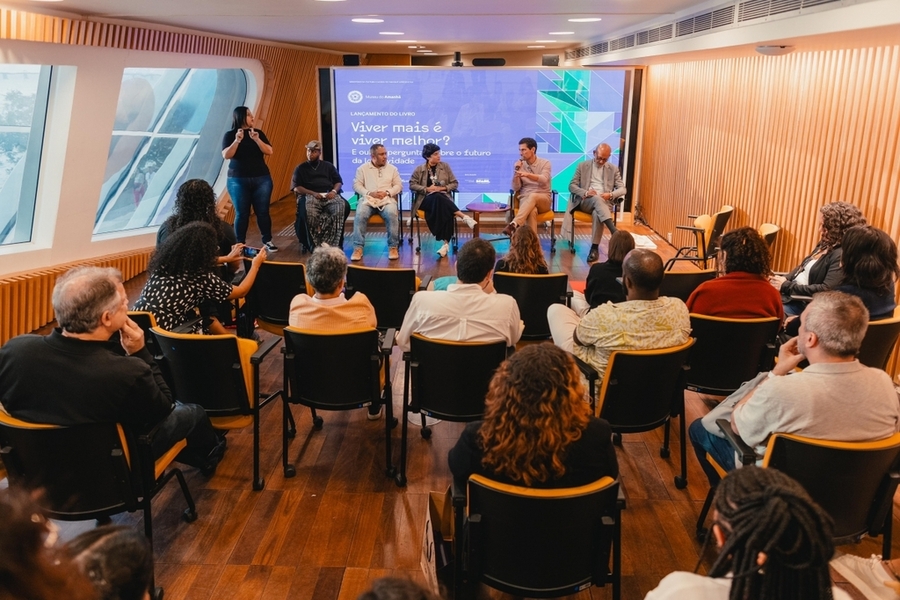
O Pensando Amanhãs é uma coleção de livros inovadora, desenvolvida pelo Museu do Amanhã em parceria com editores convidados. PODE UM ROBÔ SER RACISTA? O primeiro volume, intitulado "Pode um robô ser racista? e outras perguntas sobre o futuro da tecnologia", traz cinco artigos fascinantes sobre a importância da tecnologia no mundo atual e seu papel decisivo no futuro. A editora convidada, Silvana Bahia, co-diretora do Olabi e coordenadora do Preta-Lab, lidera esse volume. Nesse volume, Silvana e outros quatro autores, integrantes do Comitê Científico e de Saberes do museu, exploram, sob diferentes perspectivas, a relação entre tecnologia e sociedade. Eles destacam como a tecnologia é um produto da sociedade e carrega consigo suas marcas, vieses e preconceitos. Usando exemplos cotidianos, como redes sociais, aplicativos e documentos, os autores ressaltam a importância de democratizar não apenas o acesso à tecnologia, mas também o seu desenvolvimento. Essa democratização é fundamental para evitar a reprodução de desigualdades do passado e do presente no futuro. PODE O CAPITALISMO SER SUSTENTÁVEL? O segundo volume levanta uma questão provocativa que serve como ponto de partida para reflexões importantes: “O Capitalismo Pode Ser Sustentável?”. Através de 5 artigos de especialistas, entramos em discussões sobre sustentabilidade, diversidade, inclusão e o papel das empresas no desenvolvimento sustentável. Convidando a uma reflexão coletiva, propondo um diálogo aberto e acessível sobre temas críticos que definirão as próximas décadas. A publicação conta com Fábio Scarano, atual curador do Museu do Amanhã e titular da Cátedra UNESCO de Alfabetização em Futuros — uma parceria com a UFRJ - Universidade Federal do Rio de Janeiro, como editor-convidado; e os autores Andreza Maia, especialista em diversidade e inclusão e cofundadora do observatório Futuros Possíveis; Anna Carolina Fornero Aguiar, bióloga e pesquisadora da Cátedra UNESCO de Alfabetização em Futuros; Paulo Durval Branco, diretor-adjunto do Instituto Internacional para Sustentabilidade (IIS); e Beatriz Carneiro, doutoranda em Ciências Ambientais e Conservação e também pesquisadora da Cátedra UNESCO de Alfabetização em Futuros. VIVER MAIS É VIVER MELHOR? O terceiro volume e mais recente lançamento da coleção nos questiona: Viver mais é viver melhor?” ou, será que a longevidade segue acompanhada da ideia de qualidade de vida? Nesta publicação, o editor Hugo Aguilaniu — neurocientista e integrante do Comitê Científico e de Saberes do Museu do Amanhã — traz um artigo com a reflexão sobre como a busca pelo prolongamento da vida é um tema antigo para os seres humanos, mas ainda pautado em uma ideia distante do que de fato pode ser a longevidade, aliada a outros fatores da vida. Hugo convida para publicação Mychael Lourenço, neurocientista e professor do Instituto de Bioquímica Médica da UFRJ; Dani Balbi, professora da ESPM, roteirista e primeira transexual a exercer mandato como deputada estadual na Alerj; Alexandre Kalache, médico, gerontólogo e presidente do Centro Internacional de Longevidade Brasil; e Geni Núñez, ativista indígena Guarani, psicóloga e escritora. SONHAR TRANSFORMA O MUNDO? E outras perguntas sobre o futuro dos sonhos O quarto e mais recente volume e mais recente da série apresenta uma investigação multifacetada sobre o papel dos sonhos, abordando o tema a partir de diferentes perspectivas que conectam filosofia, ciência e cultura. A edição reflete sobre como os sonhos podem orientar visões de mundo em grupos originários e quilombolas, destacando sua importância na construção coletiva de identidades e futuros. Também é discutida a relação entre o sonhar e a qualidade de vida, com foco nos impactos dos sonhos sobre a saúde e o bem-estar, entre outros eixos de discussão que envolvem os sonhos como formas de autoconhecimento e ferramentas de orientação para decisões importantes e, ainda, uma reflexão sobre a natureza dos sonhos enquanto desejos individuais e suas potencialidades para fomentar utopias e visões coletivas Com essa diversidade de olhares, a edição busca provocar reflexões sobre o papel dos sonhos na transformação pessoal e social, ampliando os horizontes para pensar futuros possíveis.
Thinking Tomorrow is an innovative book collection developed by the Museum of Tomorrow in partnership with guest editors. CAN A ROBOT BE RACIST? The first volume, entitled "Can a robot be racist? and other questions about the future of technology," features five fascinating articles on the importance of technology in today's world and its decisive role in the future. Guest editor Silvana Bahia, co-director of Olabi and coordinator of Preta-Lab, leads this volume. In this volume, Silvana and four other authors, members of the museum's Scientific and Knowledge Committee, explore, from different perspectives, the relationship between technology and society. They highlight how technology is a product of society and carries with it its marks, biases, and prejudices. Using everyday examples, such as social networks, applications, and documents, the authors emphasize the importance of democratizing not only access to technology but also its development. This democratization is fundamental to preventing the reproduction of past and present inequalities in the future. CAN CAPITALISM BE SUSTAINABLE? The second volume raises a provocative question that serves as a starting point for important reflections: "Can Capitalism Be Sustainable?". Through 5 articles by experts, we enter into discussions about sustainability, diversity, inclusion, and the role of companies in sustainable development. Inviting collective reflection, proposing an open and accessible dialogue on critical issues that will define the coming decades. The publication features Fábio Scarano, current curator of the Museum of Tomorrow and holder of the UNESCO Chair in Literacy for the Future — a partnership with UFRJ - Federal University of Rio de Janeiro, as guest editor; and the authors Andreza Maia, specialist in diversity and inclusion and co-founder of the Possible Futures observatory; Anna Carolina Fornero Aguiar, biologist and researcher at the UNESCO Chair in Literacy for the Future; Paulo Durval Branco, deputy director of the International Institute for Sustainability (IIS); Beatriz Carneiro, PhD candidate in Environmental Sciences and Conservation and also a researcher at the UNESCO Chair in Literacy for the Future. IS LIVING LONGER LIVING BETTER? The third and most recent volume in the collection asks us: "Is living longer living better?" Or, does longevity go hand in hand with the idea of quality of life? In this publication, editor Hugo Aguilaniu—a neuroscientist and member of the Scientific and Knowledge Committee of the Museum of Tomorrow—presents an article reflecting on how the pursuit of life extension is an age-old theme for human beings, but still based on an idea far removed from what longevity can actually be, combined with other factors of life. Hugo invites Mychael Lourenço, neuroscientist and professor at the Institute of Medical Biochemistry of UFRJ; Dani Balbi, professor at ESPM, screenwriter, and the first transsexual to hold office as a state deputy in the Alerj; Alexandre Kalache, physician, gerontologist, and president of the International Longevity Center Brazil; and Geni Núñez, Guarani indigenous activist, psychologist, and writer, to contribute to the publication. DOES DREAMING TRANSFORM THE WORLD? And other questions about the future of dreams The fourth and most recent volume in the series presents a multifaceted investigation into The book explores the role of dreams, addressing the theme from different perspectives that connect philosophy, science, and culture. This edition reflects on how dreams can guide worldviews in indigenous and quilombola groups, highlighting their importance in the collective construction of identities and futures. It also discusses the relationship between dreaming and quality of life, focusing on the impacts of dreams on health and well-being, among other areas of discussion involving dreams as forms of self-knowledge and tools for guiding important decisions. Furthermore, it reflects on the nature of dreams as individual desires and their potential to foster utopias and collective visions. With this diversity of perspectives, the edition seeks to provoke reflections on the role of dreams in personal and social transformation, broadening horizons for thinking about possible futures.
Tipo de Projeto
Nucleo
Eixo temático
Comunidades e TerritóriosEixo temático
CulturaEixo temático
SustentabilidadeEixo temático
TecnologiaEixo temático
FuturosEixo temático
Relações
Item do acervo4
Evento relacionado
Assets
Imagem