
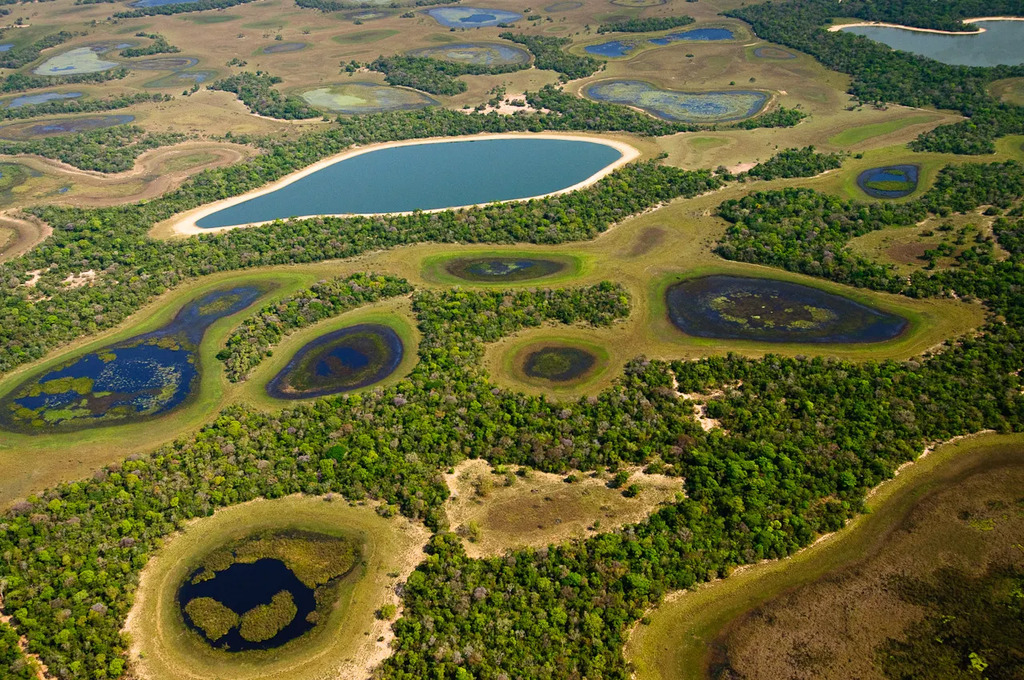
Pantanal. Photo: SOS Pantanal.
Considered the largest wetland in the world, the Pantanal is experiencing its most dramatic moment in recent history. The worst drought in 30 years has fueled the spread of fires that have already consumed an area ten times larger than the city of São Paulo. The Paraguay River, the main artery of a vast territory—equivalent to the combined area of Belgium, the Netherlands, Portugal, and Switzerland—has been suffering from small blockages over the years. If this artery is obstructed, the entire system will collapse. According to WWF Brazil, about 40% of the total area of the Upper Paraguay basin has already been deforested, and 30% of the springs that feed the Pantanal are at ecological risk, demanding urgent action.
Curbing this persistent and long-lasting infection of the Pantanal—which is now reaching its peak, turbocharged by the effects of the climate emergency—is an urgent and unavoidable measure. Coordinated actions by federal, state, and neighboring countries are fundamental to combating this collapse with the necessary firmness. Governments, the third sector, and productive sectors, conservationists, environmentalists, and ranchers have an obligation to defend our future. The Pantanal is burning—and along with it, our heritage. The damage is immeasurable. #SOSPantanal #PantanalOnFire
Ten facts about the Pantanal
1. The Pantanal is the largest wetland in the world;
2. The Pantanal biome was recognized as a Biosphere Reserve in 2000;
3. In addition to Brazil (states of Mato Grosso and Mato Grosso do Sul), Paraguay and Bolivia also share the Pantanal biome;
4. In Brazil alone, the Pantanal is home to 3,500 plant species;
5. Floods can cover up to 2/3 of the Pantanal area;
6. Livestock farming has been part of the Pantanal tradition for over 200 years and continues to be the main economic activity in the region;
7. Fishing is the second largest economic activity in the Pantanal, generating approximately R$ 40 million annually;
8. The jaguar in the Pantanal can weigh up to 150 kilograms, feeding on approximately 85 species of animals that live in the region;
9. There are more species of birds in the Pantanal (656) than in North America (approximately 500);
10. The Brazilian Pantanal receives 1 million tourists annually.
Sources: WWF, The Guardian, Ministry of the Environment (MMA)