
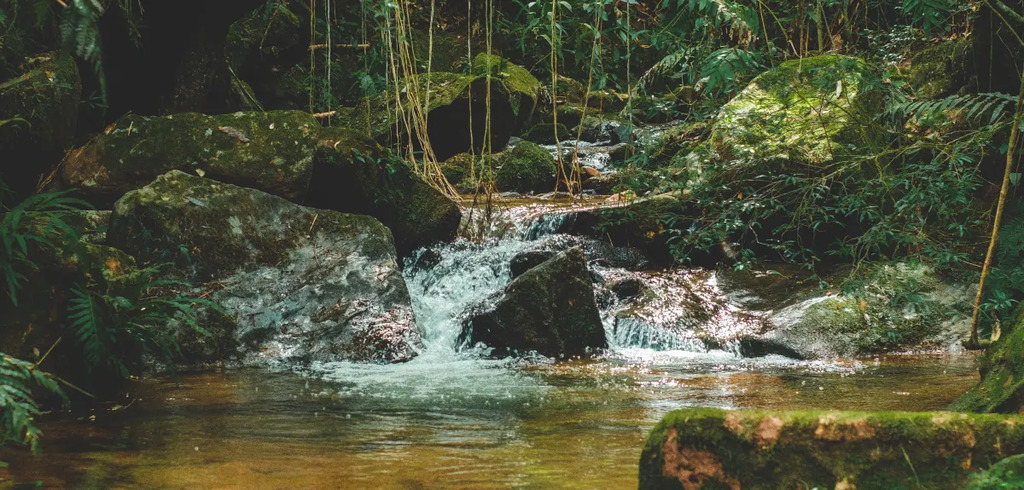
Caldeirao Waterfall, Baependi - State of Minas Gerais, Brazil. Photo: Leo Foureaux | Unsplash.
The IDG (Institute for Development and Management) works towards a regenerative economy that does not degrade nature by depriving territories of the water that life within them needs, and for environmental justice, ensuring that all people, especially the most vulnerable populations, have access to healthy water and basic sanitation.
The Covid-19 pandemic cruelly exposed the challenges that humanity faces at the beginning of the 21st century, especially the relationship that society maintains with the Earth's natural resources and goods. One of them is water. Deforestation of biomes, acidification, pollution and waste in the oceans, pollution, degradation and extinction of life in freshwater bodies. There are many human actions that result in the destruction of biodiversity and compromise our water security. The date established by the United Nations as World Water Day should serve as a call for reflection and action.
In Rio de Janeiro, at the beginning of the pandemic, while scientists warned about the need for hand hygiene, many favelas, communities and villages did not even have access to drinking water. We know that these areas are particularly concentrated in Black and Indigenous populations. Precarious access to water is also deeply related to zip code, color, and race; therefore, this is a point of attention. The city was experiencing a supply crisis that led many residents to become ill and have to buy bottled water.
The quality of the water we receive in our homes and workplaces depends not only on good treatment but also on the preservation of our watershed and the recovery of degraded areas through basic sanitation, reforestation, and proper solid waste collection. These principles, moving towards a circular economy, are still underdeveloped in the country but should be at the center of public policies to be implemented.
At IDG, we believe in multi-sectoral collaboration where actions are carried out by public and private entities and civil society organizations, the only way to achieve efficient and democratic governance. Among other actions, we support the Guanabara Bay Observatory, a beacon for monitoring and developing projects that contribute to the depollution of the Bay. We manage the Forests of Tomorrow project, which, in partnership with the State Government, will reforest 1,100 hectares of Atlantic Forest in the State. At the Museum of Tomorrow, which since 2020 has been promoting debates on the Decade of the Oceans, established by the UN starting in 2021, we are participating in the #NoWasteChallenge, an initiative that will award projects with proposals for the depollution of the oceans.
Covid-19 has shown us that there is no time to lose and that we run serious risks of suffering from other pandemics if we do not act with more awareness and planning. Regarding water, and the life it provides, society needs to react, change its consumption habits, and pressure governments and companies to modify current ways of producing and consuming. Water is a resource for everyone and must be preserved to guarantee well-being and, ultimately, the very survival of humanity and nature in our time—this marvelous biodiversity that we love, in the home we inhabit together, Earth.