
When the weather dictates where we can call home
24/04/2024
Author
Thematic Axis
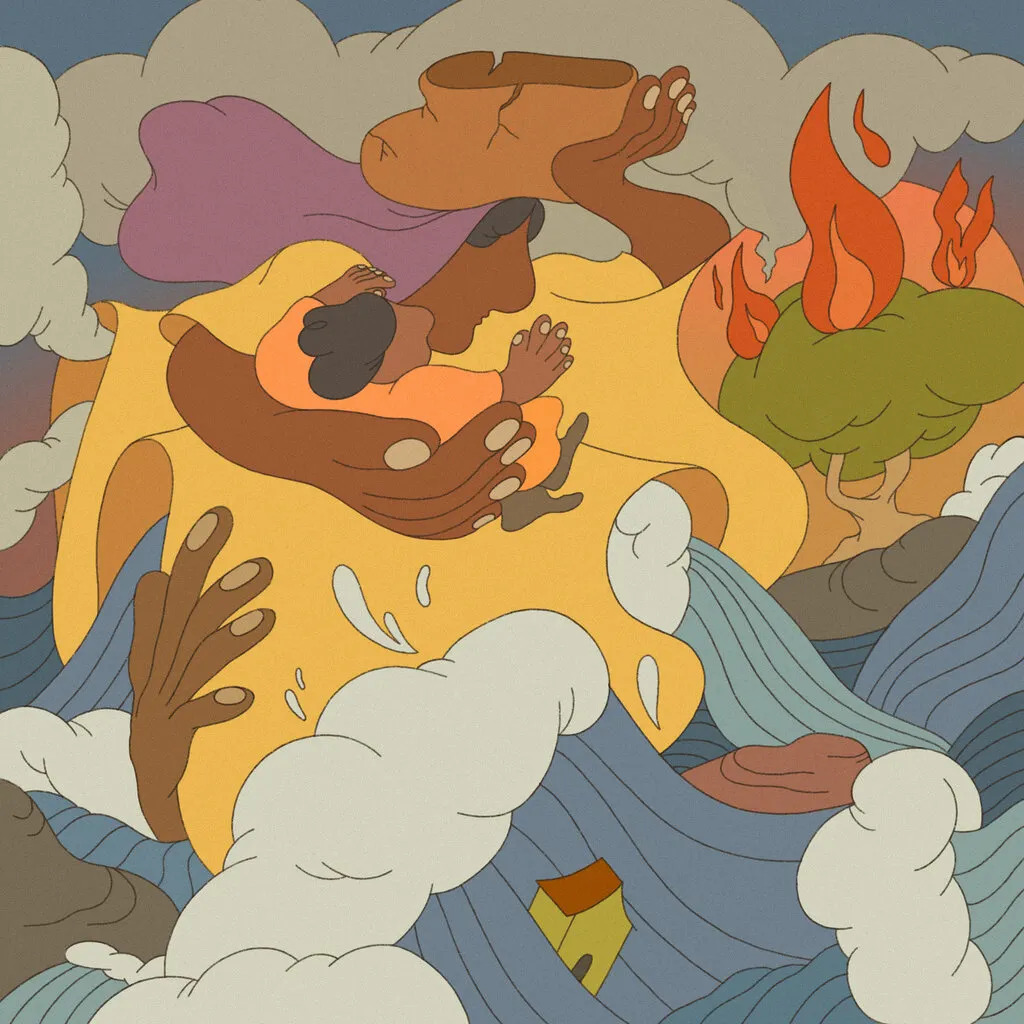
Illustration by Paola Saliby for the article "The New York Times: The Climate Crisis Is Worse for Women". Credits: © 2025 Paola Saliby
Our world is changing rapidly, and with it, our ability to live in certain places. Extreme weather events, such as severe droughts and devastating floods, are redefining the concept of habitability, forcing communities to reconsider their homes and ways of life.
Globally, we are witnessing an increase in the frequency and intensity of extreme weather events. This results in significant challenges, such as food insecurity, limited access to clean water, the spread of disease, and an increase in the number of climate refugees. Regions such as Sub-Saharan Africa, Southeast Asia, and parts of Latin America are among the most affected.
In Brazil, the reality is no different. The Northeast region faces prolonged droughts that threaten agriculture, while the South suffers from floods that displace thousands of people. These extreme conditions directly affect health, education, and the economy, jeopardizing the future of many communities.
In areas like the Northeast, long periods without rain dry up the hopes of many farmers. On the other hand, torrential rains in the South devastate entire crops, affecting the country's food security. Beyond the direct influence of climate change, the negative effects are amplified when we consider indirect impacts. Extreme weather events also affect various pollinators, for example, which are essential for food production worldwide.
Increased flooding spreads waterborne and insect-borne diseases, such as dengue fever. Lack of access to potable water during droughts exacerbates the situation, jeopardizing public health. When combined with heat waves that already impact a large part of the population, especially socioeconomically vulnerable communities, the health risk intensifies.
Children are frequently forced to drop out of school, either to help their families find resources or because their schools have been damaged or are inaccessible due to natural disasters.
Loss of habitability is one of the greatest challenges of our time, requiring a unified global response.
In Brazil, adaptation and mitigation through public policies, environmental education, and community action are essential to face this challenge. It is time to reflect on how our actions affect the planet and what we can do to ensure a habitable future for the next generations.
This article was developed in collaboration by the Communication and Scientific Development areas of the Museum of Tomorrow, aiming to provide updated and evidence-based insights into the impacts of climate change on habitability. Our goal is to promote a broad and accessible understanding of current climate challenges, encouraging reflection and collective action for a sustainable future.