
The Journey of Refugees from Old Fangak to the Amazon: The Invisible People of the Climate Crisis
24/04/2024
Author
Thematic Axis
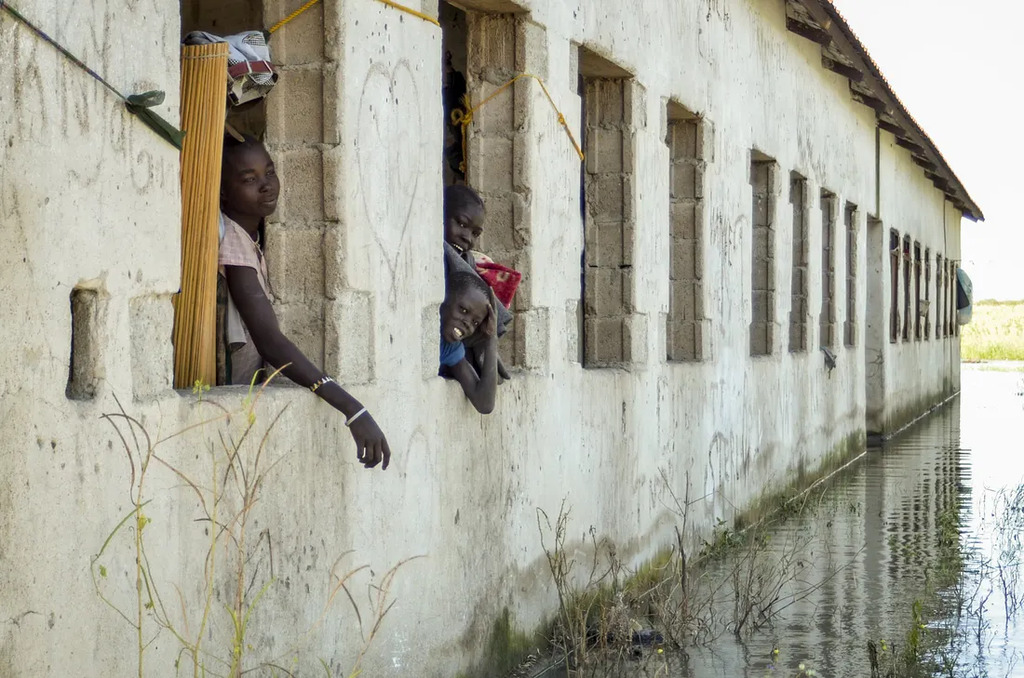
Flooding in South Sudan, 2020. Photo: Maura Ajak | Associated Press (AP)
Climate change is giving rise to a new category of refugees, invisible to the eyes of international law, but severely affected in their daily lives. They are climate refugees, people forced to leave their homes due to environmental disasters exacerbated by human action.
The Drama of Old Fangak
In Old Fangak, located in Sudan, the community faces devastating floods. The waters not only submerge lands but also bring disease and malnutrition, challenging human resilience. Data from Doctors Without Borders shows an alarming increase in precarious health conditions, directly linked to climate change. This scenario is not isolated, but a reflection of a larger crisis affecting thousands of global communities.
This brutal reality forces many to become climate refugees, fleeing their homes in search of safety and basic sustenance. The daily struggle of these families for survival under extremely adverse conditions reflects a global scenario in which climate change is redefining the geography of human habitability and pushing entire communities to the brink of existence.
Meanwhile, the choice to remain on their lands, despite risks and adversities, underscores a deep and often unbreakable connection to their cultures and heritage. For many populations, such as those of Old Fangak, the land is more than just physical space; it is a fabric of memory, identity, and belonging. Even in the face of imminent danger, the decision to stay is a testament to human resilience and the importance of cultural connection. This attachment can be a source of strength, but it also highlights the vulnerability of these communities who, caught between rising waters and scarce resources, face acute dilemmas about migrating in search of safety or remaining and fighting for survival on their ancestral land.
In contrast to the floods of Old Fangak, the Amazon suffers from prolonged droughts. These not only threaten biodiversity but also the livelihoods of indigenous and local communities. Studies indicate a direct correlation between deforestation, changes in rainfall patterns, and increased vulnerability of local populations. The scarcity of potable water and the reduction of arable land are pushing these communities to the limit, forcing them to change their traditional survival practices.
The stories of the climate refugees of Old Fangak and the Amazon are poignant examples of the current climate crisis. They invite us to reflect on our collective responsibility and the actions needed to mitigate these impacts. It is urgent to legally recognize climate refugees, guaranteeing them protection and support. Furthermore, we need to rethink our consumption practices and environmental policies to prevent future forced displacements.
Climate refugees represent one of the most complex challenges of our era. The stories of Old Fangak and the Amazon teach us about the urgency of climate action and the need for global solidarity. It is time to act, not only to save the planet, but to guarantee a dignified future for all its inhabitants.
This article is a production of the Communication and Scientific Development areas of the Museum of Tomorrow, aiming not only to inform, but also to inspire action and empathy for climate refugees. Through a human portrait, we seek to highlight the impacts of climate change and motivate society towards the urgency of climate action, reflecting our commitment to building a more sustainable and just future.