
Art: press release
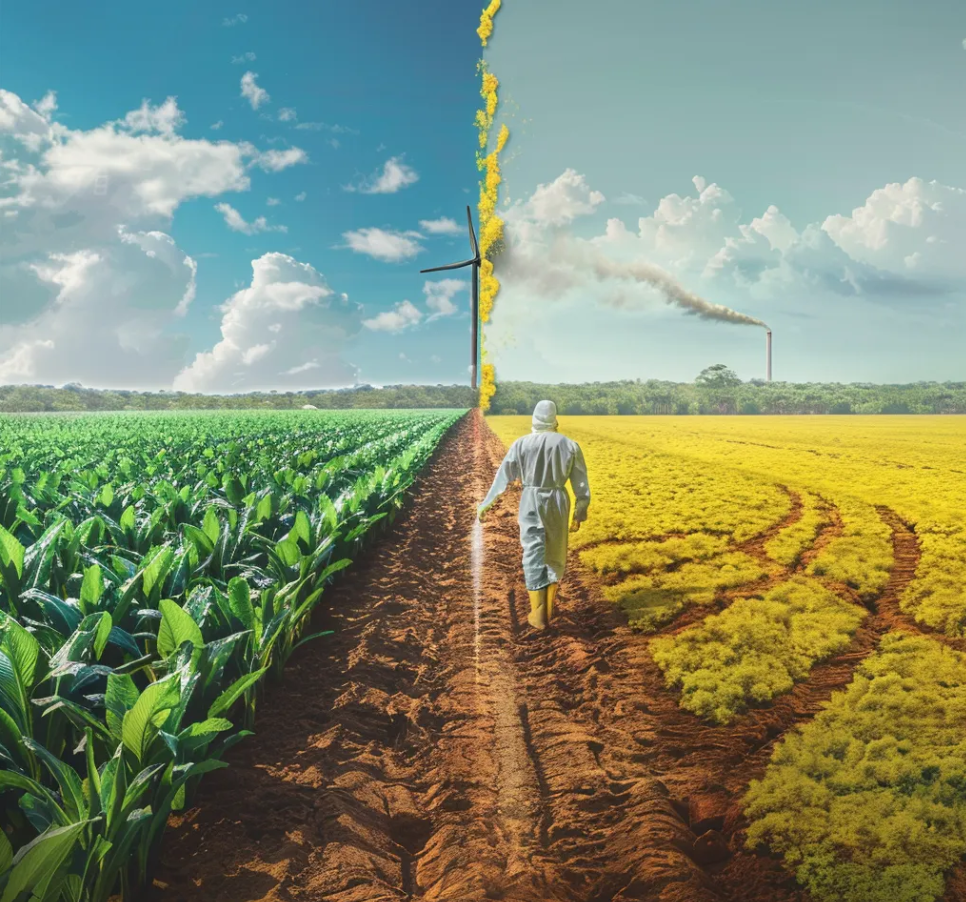
Brazil faces a modern dilemma that puts the population's food security and agricultural production methods at risk. At the center of the agenda is the intensive use of pesticides, which boosts agricultural productivity, but presents considerable risks to health and the environment. This article is an invitation to reflect on this complex relationship, exercising connections with climate justice issues and the impacts of extreme heat. After all, everything connects when we talk about climate.
Chemical Dependency in Nature
Yes, historically, Brazil opted for an export-oriented agricultural production model, highlighting soybean cultivation, which is highly dependent on fertilizers and pesticides. Data from the FAO — Food and Agriculture Organization — indicate that Brazil is the world's largest consumer of pesticides, a worrying title that reflects the growing dependence on these substances in national agribusiness. In 31 years, the consumption of pesticides increased by an impressive 1,300%, an indicator of the escalation of this chemical dependence.
Health Risks and Environmental Injustices
The increase in the use of pesticides poses serious risks to public health, with one person dying every two days due to poisoning by these compounds in Brazil. Children and adolescents, the most vulnerable groups, represent a significant portion of the victims. Collaboration between international agrochemical companies and Brazilian agribusiness has promoted an agricultural model that ignores the harm of these substances, exposing the population to unacceptable risks.
Urban Challenges and Food Security
The movement of accelerated urbanization stimulates the process of food insecurity in urban areas. Factors such as employment, income and access to healthy food are crucial to understanding the dynamics of hunger and poverty. The dependence on pesticides in agricultural production not only affects the quality of available food, but also contributes to an unsustainable development model that ignores the needs of the most vulnerable populations.
Climate Justice and the Future of Agriculture
Incorporating climate justice agendas, it is necessary to recognize how the excessive use of pesticides connects with contemporary climate challenges. The impacts of extreme heat increase the risks associated with the use of these substances, affecting the resilience of agricultural communities and biodiversity. Climate change demands an urgent reassessment of agricultural production methods, with a renewed focus on sustainability and the health of the planet.
For Agriculture and a Sustainable World
The path to sustainable agriculture and a fair society requires a profound transformation in how we produce and consume food. Promoting agroecology and agricultural practices that preserve the health of soil, water and biodiversity is essential. Agrarian reform, with a focus on sustainable cultivation methods, appears as a viable solution to contemporary challenges, offering an alternative to the pesticide-dependent model.
Food security, a basic right of the entire population, can only be achieved through effective public policies that address the root causes of food insecurity, poverty and inequality. Brazil, with its agricultural potential and biodiversity, has the opportunity to lead by example, adopting practices that guarantee food production in a fair and sustainable way, ensuring the well-being of all generations.