Waters of fresh start: for a future where black women, memory and the planet
25/07/2025
Author
Thematic Axis
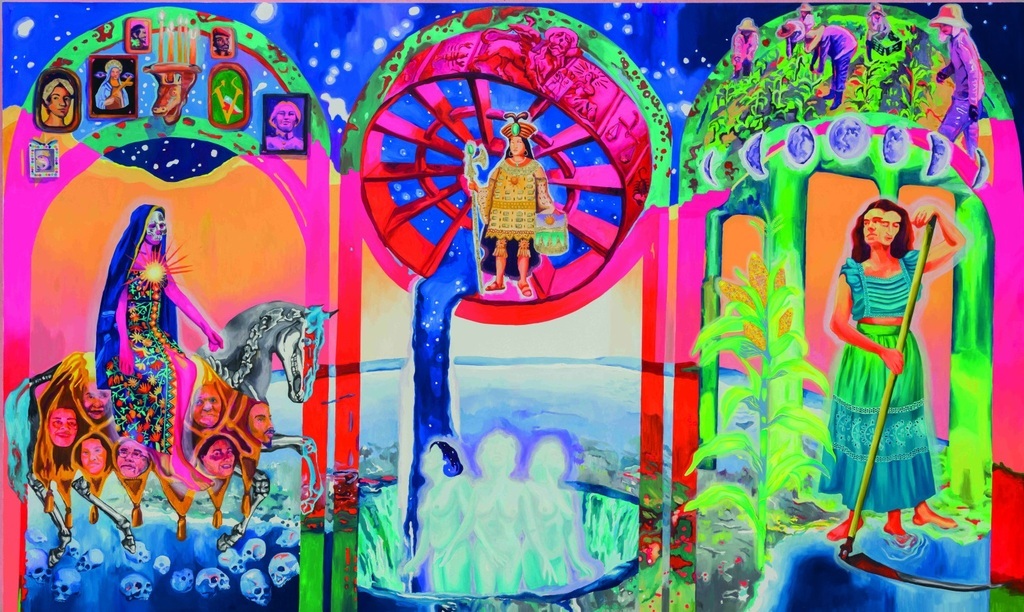
Marcela Cantuária, The South American Dream, 2022-2023. Photograph: press release.
In the month in which we celebrate the International Day of Black Latin American and Caribbean Women, I was struck by a powerful experience: visiting the Tromba d’água exhibition, on display at the Museum of Tomorrow. There, in front of the works of 27 artists from 9 Latin American countries, I felt the strength of an ancestral call, a call that comes from the waters, the wombs, the voices and wisdom that insist on living, resisting and transforming the world.
The exhibition touched me deeply. Not only for the colors, shapes and sounds, but for the living presence of water as a link between spirituality, ancestry and the future. For me, a black Brazilian lesbian and Umbanda fan, seeing the waters represented as a space of life and strength (and not of destruction) is a direct salute to the matriarchs who precede me. Iemanjá, Oxum, Nanã: the waters that inhabit and guide our crossings were all there. Flowing.
Waterspout is not just an exhibition about the weather. It's about survival, about knowledge that comes before the crisis. The artists present ancestral technologies that re-enchant the world, point out collective paths and reaffirm what the West has often ignored: the future will not be white, male and hegemonic. The future is circular, made of cycles, turns, memory and new beginnings.
As Françoise Vergès reminds us, in Decolonizing the museum: program of absolute disorder, museums need to break with the idea of neutrality and face their responsibility in the production of colonial narratives. Museums that welcome dissenting voices, as in this exhibition, act as spaces for historical reparation and radical imagination. They not only exhibit works, but offer shelter for collective dreams.
And dreaming, for us, black Latin American and Caribbean women, has always also been a form of resistance. Dreaming is an ancestral survival strategy. When I saw the works on display, I thought about how many times we have been expelled from images, from history, from science, and how we keep returning. Like water in its cyclical movements.
In African-diasporic thought, the concept of Sankofa teaches us that we need to look back to move forward. The Tromba d’água exhibition is this gesture: rescue and reinvention. It is also a cry for climate justice. After all, we, black women from the peripheries of the world, are the most affected by environmental crises, even though we are the ones who contributed least to them. When an exhibition like this occupies the Museum of Tomorrow, it not only denounces, but rebalances. Honor. Repair.
Water taught me that everything is flow: birth, death, restart. It reminded me that there is life within us that is also the sea. That there is a fight, but there is a party. That there is pain, but there is dance. That there is silence, but there is a drum.
This July 25th, as we celebrate our stories, our bodies and our voices, I renew my commitment to a tomorrow where all black women fit. A tomorrow where culture, science and spirituality walk together. Where the museum is also a quilombo. And where the water, instead of drowning us, bathes us in the future and new beginnings.