
Identifier
MDA.MUS.00008
Support
Structure
Title
Exhibition installation Tomorrows
Instalação expositiva Amanhãs
Instalação expositiva Amanhãs
Group
Description
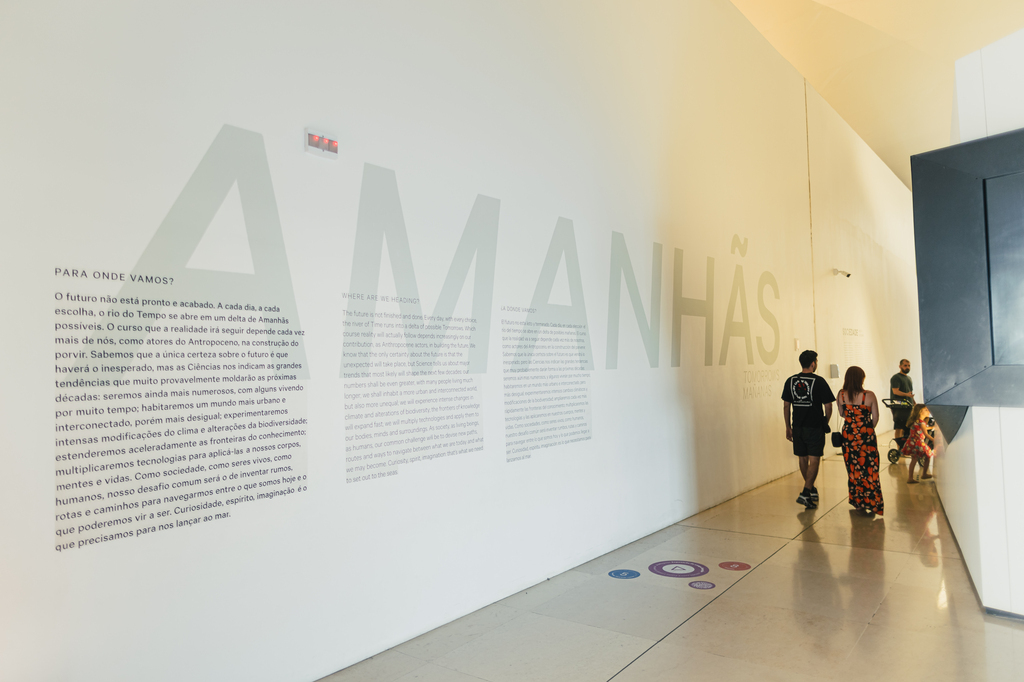
Tomorrows is an exhibition installation located after the Anthropocene and before the Us area. In this space, the visitor is invited to learn about and reflect on the opportunities and risks facing humanity in the coming decades.
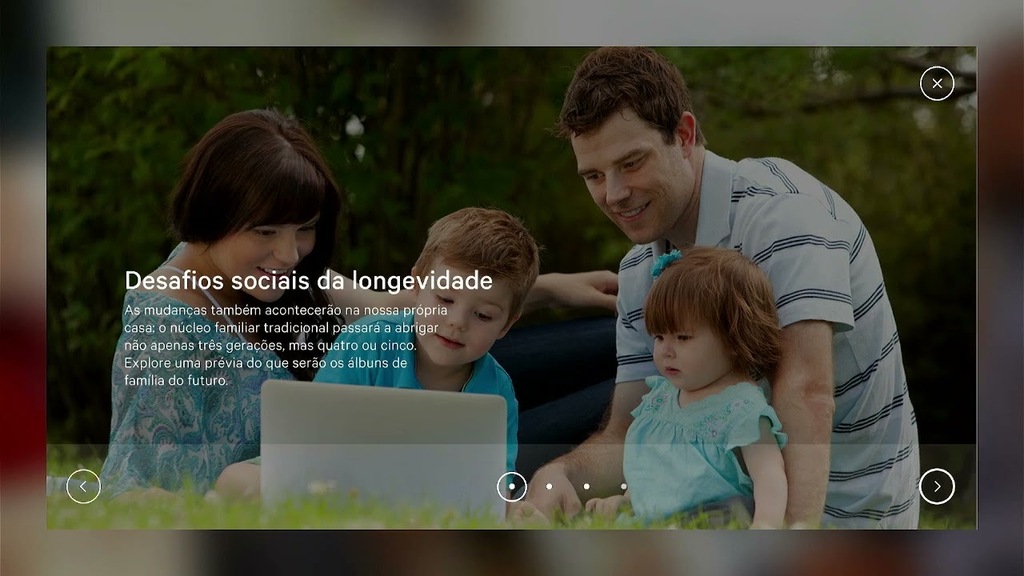
The concept of Tomorrows is built upon the intertwining of six major trends: climate change; population growth and increased longevity; the integration and growing diversity of people, nations, and regions; the expansion in the number, variety, and capacity of technological artifacts; transformations in biodiversity; and the expansion of knowledge.
The installation starts from the diagnosis that current forms of life are unsustainable and that the planet is facing profound transformations. The next five decades will concentrate more changes than the last ten thousand years, affecting even the definitions of life and humanity as we know them.
From an exhibition design perspective, the installation consists of a large, continuous white element of varying height, with a shape inspired by origami—the Japanese art of paper folding—crossed by a black exhibition element that serves as a support for the contents. Along this route, visitors circulate through three major thematic areas: Society, Planet, and Human. Each of these areas brings together video installations, interactive tables with games and experiences, as well as interviews and content presented on interactive screens.
On the final wall of the installation, three screens are arranged, each corresponding to one of the areas of the large origami, bringing together the interactive content presented throughout the experience.
The texts related to the Tomorrows exhibition installation can be found in the Additional Information > Text section.
Amanhãs é uma instalação expositiva localizada após o Antropoceno e antes da área Nós. Nesse espaço, o visitante é convidado a conhecer e refletir sobre as oportunidades e os riscos que se apresentam para a humanidade nas próximas décadas. O conceito de Amanhãs é construído a partir do entrelaçamento de seis grandes tendências: as mudanças climáticas; o crescimento populacional e o aumento da longevidade; a integração e a crescente diversidade de pessoas, povos e regiões; a expansão do número, da variedade e da capacidade dos artefatos tecnológicos; as transformações da biodiversidade; e a ampliação do conhecimento. A instalação parte do diagnóstico de que as formas atuais de vida não são sustentáveis e de que o planeta enfrenta transformações profundas. As próximas cinco décadas concentrarão mais mudanças do que os últimos dez mil anos, afetando inclusive as definições de vida e de humanidade tal como as conhecemos. Do ponto de vista expográfico, a instalação é composta por um grande elemento contínuo branco, de altura variável, com forma inspirada no origami — a arte japonesa de dobrar papel —, atravessado por um elemento expositivo preto que serve de suporte aos conteúdos. Nesse percurso, o visitante circula por três grandes áreas temáticas: Sociedade, Planeta e Humano. Cada uma delas reúne videoinstalações, mesas interativas com jogos e experiências, além de entrevistas e conteúdos apresentados em telas interativas. Na parede final da instalação, estão dispostas três telas, cada uma correspondente a uma das áreas do grande origami, reunindo os conteúdos interativos apresentados ao longo da experiência. Os textos relacionados à Instalação expositiva Amanhãs encontram-se no campo Demais informações > Texto.
Amanhãs é uma instalação expositiva localizada após o Antropoceno e antes da área Nós. Nesse espaço, o visitante é convidado a conhecer e refletir sobre as oportunidades e os riscos que se apresentam para a humanidade nas próximas décadas. O conceito de Amanhãs é construído a partir do entrelaçamento de seis grandes tendências: as mudanças climáticas; o crescimento populacional e o aumento da longevidade; a integração e a crescente diversidade de pessoas, povos e regiões; a expansão do número, da variedade e da capacidade dos artefatos tecnológicos; as transformações da biodiversidade; e a ampliação do conhecimento. A instalação parte do diagnóstico de que as formas atuais de vida não são sustentáveis e de que o planeta enfrenta transformações profundas. As próximas cinco décadas concentrarão mais mudanças do que os últimos dez mil anos, afetando inclusive as definições de vida e de humanidade tal como as conhecemos. Do ponto de vista expográfico, a instalação é composta por um grande elemento contínuo branco, de altura variável, com forma inspirada no origami — a arte japonesa de dobrar papel —, atravessado por um elemento expositivo preto que serve de suporte aos conteúdos. Nesse percurso, o visitante circula por três grandes áreas temáticas: Sociedade, Planeta e Humano. Cada uma delas reúne videoinstalações, mesas interativas com jogos e experiências, além de entrevistas e conteúdos apresentados em telas interativas. Na parede final da instalação, estão dispostas três telas, cada uma correspondente a uma das áreas do grande origami, reunindo os conteúdos interativos apresentados ao longo da experiência. Os textos relacionados à Instalação expositiva Amanhãs encontram-se no campo Demais informações > Texto.
Collection
Author
Co-author
Caption
Instalação expositiva Amanhãs. 2015. Técnica mista. 350 x 3300 x 2400 cm | Duração variável.
.
Exhibition installation Tomorrows. 2015. Mixed media. 350 x 3300 x 2400 cm | Variable duration.
.
Instalación expositiva Mañanas. 2015. Técnica mixta. 350 x 3300 x 2400 cm | Duración variable.
Accessibility
Brazilian Sign Language (Libras)Accessibility
Tactile ReproductionAccessibility
Additional Type
Technique
PrintingTechnique
LacqueringTechnique
Assembly | MountingTechnique
PaintingTechnique
Electrostatic paintingTechnique
Screen printingTechnique
Mixed mediaTechnique
Material
Milky acrylicMaterial
Carbon steelMaterial
AluminumMaterial
Loudspeaker (Sound Reflector)Material
BacklightMaterial
Metal boxMaterial
Metal corner bracketMaterial
Steel sheetMaterial
Aluminum sheetMaterial
Metal sheetMaterial
ComputerMaterial
CPU (Central Processing Unit)Material
DiffuserMaterial
LED stripMaterial
LightingMaterial
LED light fixtureMaterial
WoodMaterial
MDF (Medium Density Fiberboard)Material
Metal frameMaterial
Video monitor (LED)Material
Multi-touch monitor (LED)Material
Size
350 x 3300 x 2400 cm
fileExtension
resolution
variável
fileSize
variável
duration
variável
language
speaker
Benilton Bezerra Jr.Person
Fátima PortilhoPerson
José Augusto PáduaPerson
Jurema WerneckPerson
Rogerio da CostaPerson
interviewer
director
Harrison MendonçaPerson
Marcelo TasPerson
Russ RivePerson
Tadeu JunglePerson
Tommy LindestrømPerson
VamossPerson
producer
Film Academy (Academia de Filmes)Organization
BeeldOrganization
Mario NakamuraPerson
Camila MouriPerson
SuperUberOrganization
DonaranhaOrganization
screenplay
Ludmila TavaresPerson
researcher
Benilton Bezerra Jr.Person
Beto LargmanPerson
Carlos NobrePerson
David ZeePerson
Fátima PortilhoPerson
Global Footprint NetworkOrganization
José Augusto PáduaPerson
Luiz Alberto OliveiraPerson
Luiz Pinguelli RosaPerson
Marcelo GleiserPerson
Marcelo TasPerson
Mayana ZatzPerson
Miguel NicolelisPerson
Neilton FidelisPerson
Paulo VazPerson
Rogerio da CostaPerson
Thomas LewinsohnPerson
Exhibition
Related Item10
Text
WHERE ARE WE HEADING? The future is not finished and done. Every day, with every choice, the river of Time runs into a delta of possible Tomorrows. Which course reality will actually follow depends increasingly on our contribution, as Anthropocene actors, in building the future. We know that the only certainty about the future is that the unexpected will take place, but Science tells us about major trends that most likely will shape the next few decades: our numbers shall be even greater, with many people living much longer; we shall inhabit a more urban and interconnected world but also more unequal; we will experience intense changes in climate and alterations of biodiversity; the frontiers of knowledge will expand fast; we will multiply technologies and apply them to our bodies, minds and surroundings. As society, as living beings, as humans, our common challenge will be to devise new paths, routes and ways to navigate between what we are today and what we may become. Curiosity, spirit, imagination: that's what we need to set out to the seas.
Texts located at the entrance to the exhibition installation:
WHICH TOMORROWS WE IMAGINE?
MAJOR TRENDS FOR THE NEXT 50 YEARS
SOCIETY
Most of the future population will be born in poverty regions
More people and more longevity
First person who will live to be 150 may already have been born
Migrations and growth of urban centers may lead to convergences and conflicts
More integration and differentiation
We will inhabit a world with scarce natural resources
PLANET
Climate will change rapidly throughout the Earth
Changes in global climate
Our energy energy choices will lead to either subtle or extreme climate change
Many species may not be able to withstand climate change
Changes in biodiversity
We may intensify ocean acidification
HUMAN
Intelligent systems will be increasingly powerful
More artifacts
Hybrid beings, that are simultaneously natural and artificial, will become common
Access to information is exponentially higher every day
Expansion of knowledge
Exploration of the Cosmos will expand human frontiers
Texts located at the entrance to each area described in the exhibition installation:
SOCIETY We are many, very different, yes, but very alike. We are always in association with each other - sometimes in cooperation, sometimes in conflict. In the forthcoming decades societies will share an increasingly crowded, more integrated and more differentiated, and probably more unfair. In many regions, people shall live three times longer than in the Roman Empire, and the elderly will be as numerous as the children. Megacities, with many millions of inhabitants, shall proliferate and new forms of citizenship, political participation and administrative management will need to be developed and put into practice so they can thrive. The scarcity of natural resources will require more efficiency, and the abundance of technical resources will affect many aspects of urban life. Global communication and transportation connections will live to a cosmopolitanism on a planetary scale, as well as, in many places, to an even further conservative traditionalism. We are many, very alike, yes, but very different.
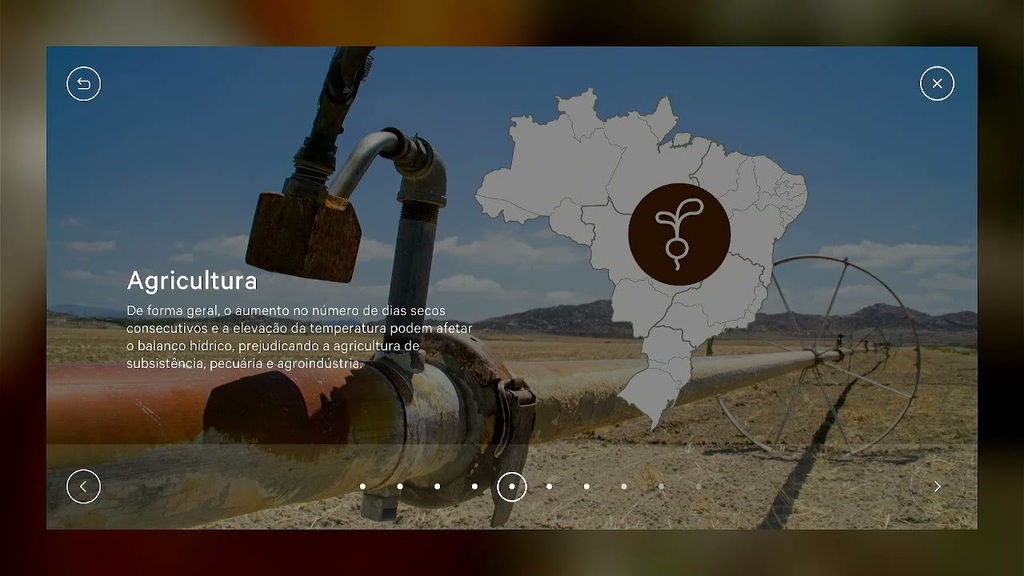
PLANET To our ancestors, the natural world, its characteristics and rhythms - the variety of environments and species, the weather cycles - were already given and defined, and humans should enjoy or endure its benefits or hardships. We are the first generation that begins to realize that, living in the Anthropocene, we will participate actively in shaping the climate regimes as well as foster substantial changes in several ecosystems. In manyregions, extreme weather events shall become more common, resulting in more floods and droughts, more frequent forests fires, and the increasing acidification of the oceans. Environmental disasters lead to forced migration; many terrestrial and aquatic species may not withstand the intensity of environmental disturbances and likewise economic activities, ranging from agriculture to fishing will face difficulties. There are already actions, however, that may moderate and soften these impacts, Before us, different future scenarios for climate and life on Earth are open. Our legacy will depend on what we decided to do today.
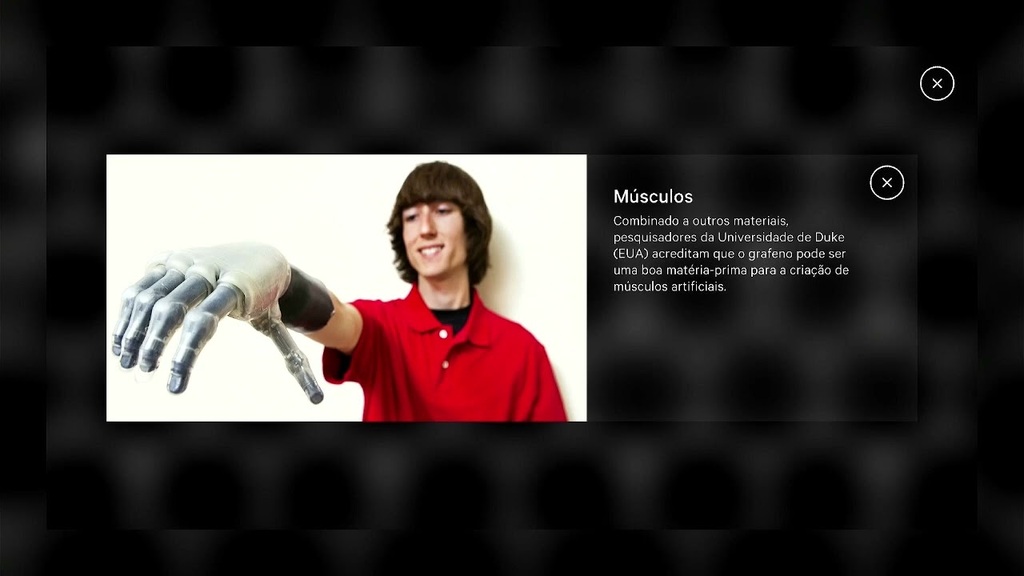
HUMAN Over the course of 20th century, technical objects had their components increasingly miniaturized and were widespread, becoming close to our bodies and minds and deeply integrated with our ways of living. At the same time, the production of knowledge in all areas of learning accelerated in an unprecedented pace and the universalization of education has led to the majority of mankind being literate today. Advances in science and technology will enable ever further innovative achievements and also present challenges never yet imagined. We will be able to create materials with amazing properties, program the characteristic of organisms, combine ever more sophisticated technological devices with our bodies, brains and senses, develop artificial intelligences, colonize other planets, perhaps even discover alien life forms in the Universe. The boundaries that define our essence, our humanity, are in continuous movement. So it becomes more and more important to understand: what is it, what will it be, to be human?
Text located at the end of the exhibition installation:
Tomorrows
Achille Mbembe
Critique of Black Reason In order to build this world of ours we must restore the humanity stolen from those whom History subjected to processes of abstraction and objectification.
PARA ONDE VAMOS? O futuro não está pronto e acabado. A cada dia, a cada escolha, o rio do Tempo se abre em um delta de Amanhãs possíveis. O curso que a realidade irá seguir depende cada vez mais de nós, como atores do Antropoceno, na construção do porvir. Sabemos que a única certeza sobre o futuro é que haverá o inesperado, mas as Ciências nos indicam as grandes tendências que muito provavelmente moldarão as próximas décadas: seremos ainda mais numerosos, com alguns vivendo por muito tempo; habitaremos um mundo mais urbano e interconectado, porém mais desigual; experimentaremos intensas modificações do clima e alterações da biodiversidade; estenderemos aceleradamente as fronteiras do conhecimento; multiplicaremos tecnologias para aplicá-las a nossos corpos, mentes e vidas. Como sociedade, como seres vivos, como humanos, nosso desafio comum será o de inventar rumos, rotas e caminhos para navegarmos entre o que somos hoje e o que poderemos vir a ser. Curiosidade, espírito, imaginação é o que precisamos para nos lançar ao mar.
Textos localizados na entrada da instalação expositiva:
QUE AMANHÃS PODEMOS IMAGINAR?
PRINCIPAIS TENDÊNCIAS PARA OS PRÓXIMOS 50 ANOS
SOCIEDADE
Maior parte da população futura nascerá em regiões de pobreza
Mais pessoas e maior longevidade
Primeira pessoa que chegará aos 150 anos já pode ter nascido
Migrações e crescimento dos centros urbanos trarão convergências e conflitos
Maior integração e diferenciação
Habitaremos um mundo com escassez de recursos naturais
PLANETA
O clima vai mudar rapidamente em toda a Terra
Transformações no clima global
Nossas escolhas energéticas resultarão em mudanças climáticas suaves ou extremas
Muitas espécies talvez não suportem as alterações ambientais
Alteração da biodiversidade
Poderemos intensificar a acidificação dos oceanos
HUMANO
Sistemas inteligentes serão cada vez mais poderosos
Mais artefatos
Seres híbridos, ao mesmo tempo naturais e artificiais, se tornarão comuns
O acesso à informação é exponencialmente maior a cada dia
Expansão do conhecimento
A exploração do Cosmos ampliará as fronteiras humanas
Textos localizados na entrada de cada área descrita na instalação expositiva:
SOCIEDADE Somos muitos, muito variados, sim, mas muito parecidos. Estamos sempre em associação uns com os outros - às vezes em cooperação; outras, em conflito. Nas próximas décadas as sociedades compartilharão um mundo cada vez mais populoso, integrado, diferenciado e provavelmente injusto. Em muitas regiões, se viverá três vezes mais que no Império Romano, e os idosos serão tão numerosos quanto as crianças. Megacidades, com muitos milhões de habitantes, se multiplicarão, e novas formas de cidadania, participação política e gestão administrativa precisarão ser desenvolvidas e experimentadas para que possam prosperar. A escassez de recursos naturais exigirá que sejamos mais eficientes, e a abundância de recursos técnicos afetará inúmeros aspectos da vida urbana. Os meios de comunicação e transporte darão lugar a um cosmopolitismo de âmbito planetário - e também, em vários locais, ao tradicionalismo mais conservador. Somos muitos, muito parecidos, sim, mas muito variados.
PLANETA Para nossos ancestrais, o mundo natural, suas características e ritmos - a variedade de ambientes e espécies, os ciclos do clima - estavam dados, definidos, e aos humanos cabia desfrutar ou suportar suas benesses ou intempéries. Somos a primeira geração que começa a se dar conta de que, ao vivermos no Antropoceno, passamos a participar ativamente da moldagem dos regimes do clima e a fomentar alterações substanciais em diversos ecossistemas. Em muitas regiões, eventos climáticos extremos deverão ser cada vez mais comuns, tendo por consequência mais inundações e secas, incêndios florestais frequentes, e a acidificação crescente dos oceanos. Desastres ambientais poderão levar a migrações forçadas; muitas espécies terrestres e aquáticas talvez não suportem a intensidade das perturbações ambientais e, do mesmo modo, atividades econômicas, que vão da agricultura à pesca, sofrerão transtornos. Mas já existem medidas que podem moderar e amenizar esses impactos. Abrem-se para nós, portanto, diferentes cenários futuros para o clima e à vida na Terra. Nosso legado vai depender do que decidimos fazer hoje.
HUMANO Ao longo do século XX os objetos técnicos tiveram seus componentes cada vez mais miniaturizados e se difundiram amplamente, aproximando-se de nossos corpos e mentes e integrando-se a nossos modos de vida. Ao mesmo tempo, a produção de conhecimento em todas as áreas de saber se acelerou de um modo sem precedentes, e a educação universalizada fez com que, hoje, a maior parte da humanidade seja escolarizada. Os avanços da ciência e da tecnologia possibilitarão ainda mais conquistas inéditas e apresentarão também desafios nunca imaginados. Poderemos criar materiais com propriedades incríveis, programar as características de organismos, combinar nossos corpos, cérebros e sentidos com dispositivos tecnológicos cada vez mais sofisticados, desenvolver inteligências artificiais, colonizar outros planetas, talvez até descobrir outras formas de vida no Universo. Os limites que definem nossa essência, nossa humanidade, estão em contínua expansão. E, assim, fica mais e mais importante compreender: o que é, o que será, ser humano?
Texto localizado ao final da instalação expositiva:
Amanhãs
Achille Mbembe
Crítica da razão negra Para construir este mundo que é o nosso, será necessário restituir, àqueles e àquelas que passaram por processos de abstração e de coisificação na história, a parte de humanidade que lhes foi roubada.
Keyword
Video3