
Museum of Tomorrow opens the doors to the world of museums for half a million Brazilians.
09/07/2020
Author
Thematic Axis
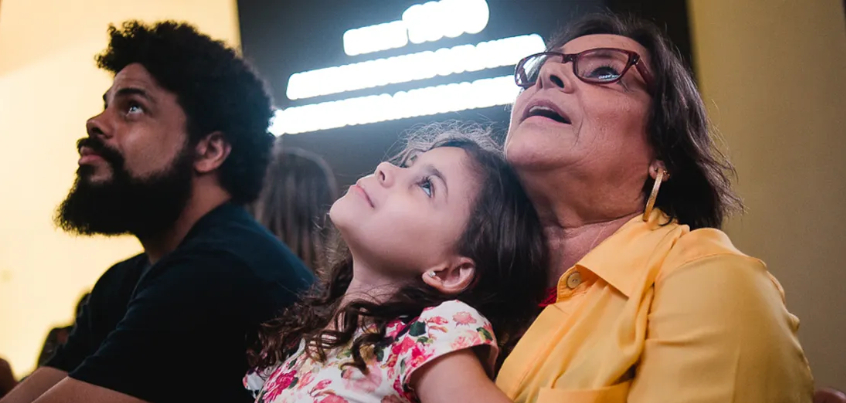
Visitors in the Anthropocene. Photograph from the Museum of Tomorrow.
The COVID-19 pandemic has changed the landscape of cities, emptying places that usually gather hundreds—sometimes thousands—of people every day. This is the case of the Museum of Tomorrow, which suspended visits in March following official health protocols. IDG, the organization that manages the Museum of Tomorrow, has just completed a survey on the public since the museum's inauguration in December 2015 until last March, when it began promoting various online activities that will be part of the programming after reopening.
The survey shows that more than 4.2 million people have already visited the Museum of Tomorrow, including 1 million residents of the city of Rio. Visitors also come from 71 of the 92 municipalities in the state of Rio, from all states in the country, and from 101 countries on all continents. With 51% of visitors living in the state of Rio and 49% in other states and countries, the Museum is frequented by people from all parts of Rio, Brazil, and the world.
Number of Visitors Who Are Not Regular Museum Goers Grows Year After Year
Beyond the sheer number of visitors, research indicates that the Museum of Tomorrow is frequently visited by people who don't usually go to museums. In total, more than half a million people entered a museum for the first time in their lives when visiting the Museum of Tomorrow, while 1.3 million had last visited a museum more than a year ago. These two groups are what cultural research calls non-habitual museum visitors.
The number of non-habitual museum visitors to the Museum of Tomorrow has been increasing over time, representing at least half of the museum's annual audience since 2018. And, in 2019, the total number of visitors who were in a museum for the first time in their lives increased from 11% to 22%; an increase of almost one hundred thousand visitors.
Research shows that these visitors have distinct sociodemographic profiles, whether viewed by gender, race, age, education, income, or place of residence. For Ricardo Piquet, CEO of IDG, this means that fostering the habit of visiting museums is a benefit that the Museum of Tomorrow promotes to Brazilians as a whole. “The data shows that 90% of Museum of Tomorrow visitors say they intend to return, and more than 95% say they would recommend the visit to family and friends. A true virtuous circle in which people visit the museum, want to return, and even recommend it to others,” says Piquet.
Visitors leave willing to change habits in favor of sustainability and coexistence.
Another positive impact of the Museum of Tomorrow is how its exhibitions and activities lead the public to reflect on global challenges and engage them in the search for solutions. Starting with changing habits. According to the research, 80% of visitors leave the Museum of Tomorrow willing to reconsider their habits in favor of a more sustainable future and better coexistence.
“These numbers show the importance of the Museum of Tomorrow, including in facing this pandemic, in the sense that people will reflect even more on consumption habits and the encroachment of humanity on nature and its effects. How to avoid a new pandemic? How to protect ourselves and not spread the virus? How to value investments in science, whether in research or in museums like ours, to respond to these crises? These are questions that the museum asks and will continue to ask after it reopens, stimulating debate and the necessary changes,” emphasizes Piquet.