
Inspiring Science - 1st Edition
11/05/2018
Thematic Axis
Documento/(PDF)
Cell Phones as Microscopes
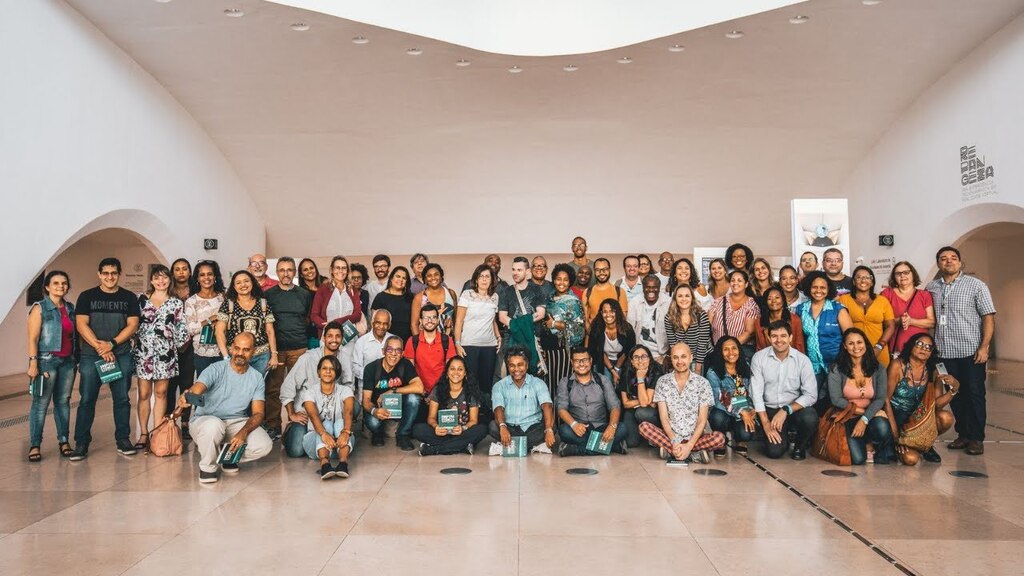
The first edition of Inspira Ciência (Inspire Science) held four in-person meetings at the Museum of Tomorrow in May and June. Combining theory and practice, teachers met with astronomers, geologists, biologists, and paleontologists to explore fundamental topics in science. They also experimented with new educational approaches to these topics in workshops with science education specialists, making use of technology. In one of these activities, for example, teachers learned how to build low-cost microscopes using electronic waste and cell phones. During the program, participants also developed group lesson plans to put their new knowledge into practice in the classroom.
Lucineia Alves, a teacher at the Juan Antonio Samaranch Municipal School in Santa Teresa, was one of those selected for the second edition of the program. She, who holds a post-doctoral degree in Neuroscience and is a specialist in science education, was enthusiastic about the opportunity.
"In the field of science, constant updating is necessary, as is the exchange of experiences and practices with other teachers. It's what we always tell students: knowledge is never too much," she said.
She mentioned that she had visited the Museum of Tomorrow several times before, including with her classes. "But this time was special. It was for a training session."
In the two public calls for applications, Inspira Ciência received over a thousand applications, selecting 120 teachers from different regions of the state of Rio de Janeiro. This selection used criteria that ensured the program's scope and the representativeness of education professionals from public and private schools, as well as gender and ethnicity. This diversity guaranteed a vibrant exchange of experiences and proved that the desire to participate in this type of training is not lacking among Basic Education teachers.
Offering opportunities for professional development to teachers is also one of the goals of SDG 4 – Quality Education – of the United Nations' 2030 Agenda and is fundamental to the success of all other goals of this Objective.